Sophia (Rosa) (Cross) Mattice was, I believe, the oldest (and possibly only) daughter of Garret and Clarissa (Cross) Rosa. Her age is iffy because either she, or other household members, never really seemed to remember how old she was when census time came around. It is believed that she was born sometime around 1815 in New York.
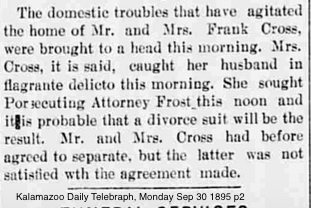
In 1838 after the Rosas and Crosses had moved to Michigan, she married a gentleman by the name of Mandrick Amandor Cross – believed to be her uncle. He was 10 years older than her. These two had seven known children together, of whom we know quite a bit about Daniel Wellington and Benjamin Franklin (aka Frank). Daniel had been arrested several times for theft and spent some time in prison. Frank was a cop in Kalamazoo County for several years. However, it appears that he was probably a very bad cop and most likely on the take – both types of behavior would contributed to his eventually being fired. After his stint as a cop Frank tried his hand at a little larceny himself, nothing to get himself in prison, but enough to get fined. There is not much nice to say about Cousin Frank. He was married and divorced twice. During the first marriage he went to court asking for a divorce; he was tired of his wife always accusing him of being with other women. Which she did. A lot. The judge said, “Sure you can have a divorce.” The second time he was in court was because his second wife was asking for the divorce, she was tired of him always being with other women. Which he did. A lot. He was a popular customer at the local brothel, and he had an African American mistress. A very renaissance man. The judge told Frank’s wife, “Sure you can have a divorce.”
But all this excitement happened in the later part of the 1800s. Before his attempts at marriage, Frank was living with his mother Sophia and her second husband, David Mattice. Mind you Frank was almost 30 at this time. The two boys did not get along, but as neither one of them were very nice people they probably rubbed each other the wrong way all the time. Sophia also might have spoiled Frank, which wouldn’t have helped the situation. So eventually things came to a head, resulting in this article appearing in the newspaper:
This incident happened in September of 1877. Frank survived the assault and lived on to be a scion of society, an example of shining knighthood for all young men, the epitome of virtue … yeah … not so much. Apparently that knock on the head, or dare I say, near death experience, didn’t shake any sense into him.
I don’t know if Sophia left David after this incident. Battered women don’t tend to do that. But, I am still working on finding more out about Frank, I can’t resist. He is such a little sh*t.
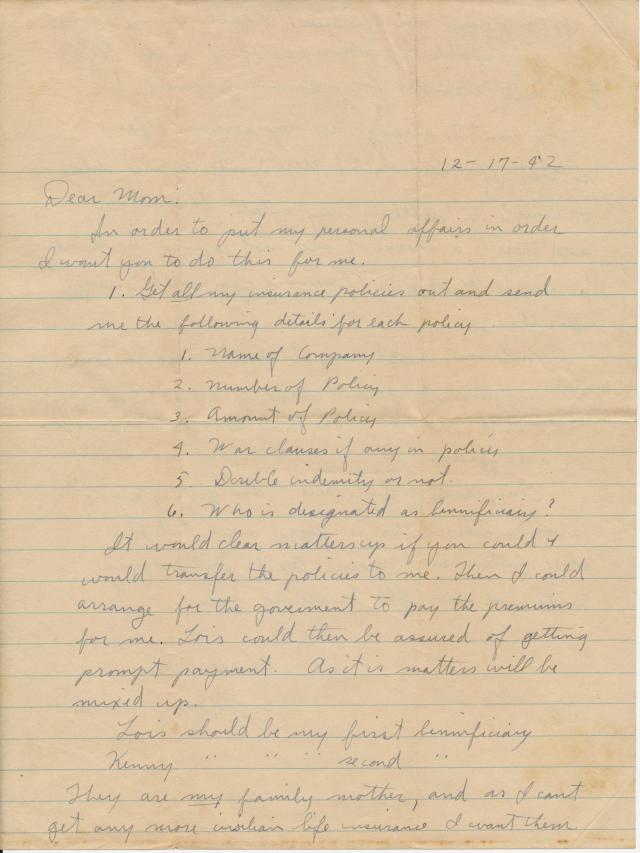
In order to put my personal affairs in order I want you to do this for me.
Get all my insurance policies out and send me the following details for each policy
1. Name of Company
2. Number of Policy
3. Amount of Policy
4. War clauses if any in policy
5. Double indemnity or not
6. Who is designated as beneficiary?
It would clear matters up if you could & would transfer the policies to me. Then I could arrange for the government to pay the premiums for me. Lois could then be assured of getting prompt payment. As it is matters will be mixed up.
Louis should be my first beneficiary
Kenny ” ” ” second ”
They are my family mother, and as I cant get any more insilian[?] life insurance I want them
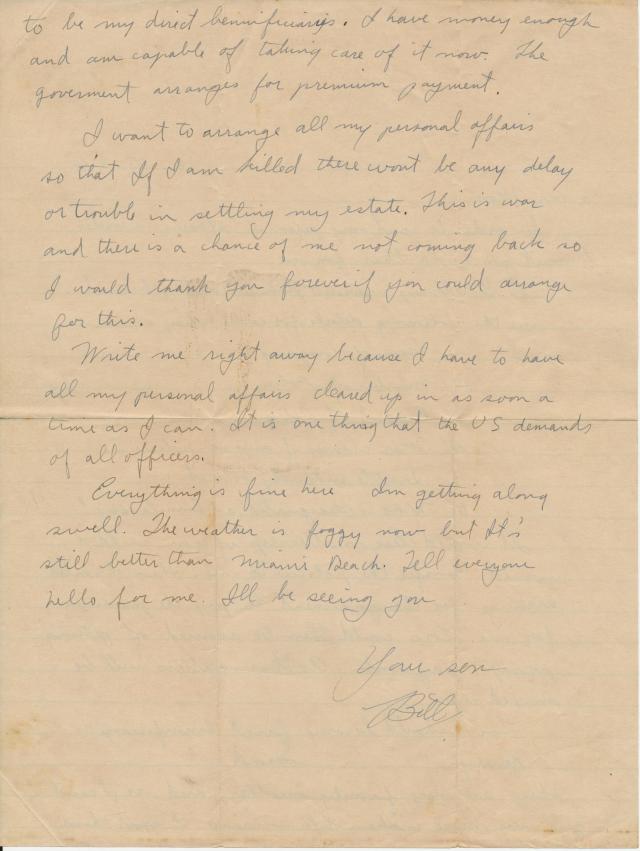
to be my direct beneficiaries. I have money enough and am capable of taking care of it now. The government arranges for premium payment.
I want to arrange all my personal affairs so that If I am killed there won’t be any delay or trouble in settling my estate. This is war and there is a chance of me not coming back so I would thank you forever if you could arrange for this.
Write me right away because I have to have all my personal affairs cleaned up in as soon a time as I can. It is one thing that the US demands of all officers.
Everything is fine here Im getting along swell. The weather is foggy now but It’s still better than Miami Beach. Tell everyone hello for me. Ill be seeing you.
For the most part, when you are researching your ancestors, you don’t very often find much information about their personality or character. Sometimes it can be sussed out from certain types of court or probate records, or land deeds that have special dispensations, or if you are lucky a historical biography is found for them.
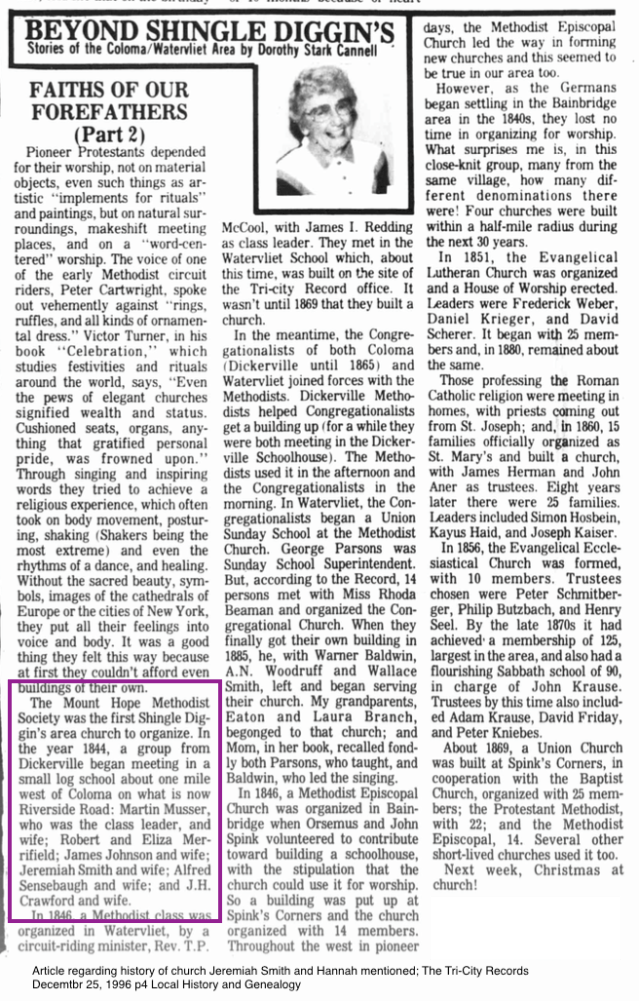
In the case of my Michigan Smiths it was a couple of newspaper articles in the paper that shined a sliver of light on their lives. The church history in the article below doesn’t actually say much about Jeremiah or Hannah Smith’s personality per se, but it does tell me about certain aspects of their lives that I would otherwise have to guess at, for example – their faith was important to them.
Jeremiah was born in 1790 in the state of New York. He was the descendant of German ‘Schmidt’ ancestors who emigrated to America in 1709 and Palantine Germans. The family was never well to do, so Jeremiah and his wife Hannah (Houghtaling) had to work hard to feed and cloth their family. At one time Jeremiah, unable to pay his bills, spent a few months in debtors prison when the family was living in Cayuga County, New York. Possibly in an attempt to avoid their debts, or just to try to make a better life for themselves, the Smiths packed up their trunks and headed to Michigan in the early 1840s. Their eldest son, Michael, had moved out there a year of so earlier.
The family seemed to be able to make a better go of it in their new home in Berrien County, Michigan. By 1844 they were meeting in a small log school about one mile west of Coloma, with other pioneers from the area, as the Mount Hope Methodist Society. Both Jeremiah and Hannah are mentioned as members of this first meeting in local historical records.
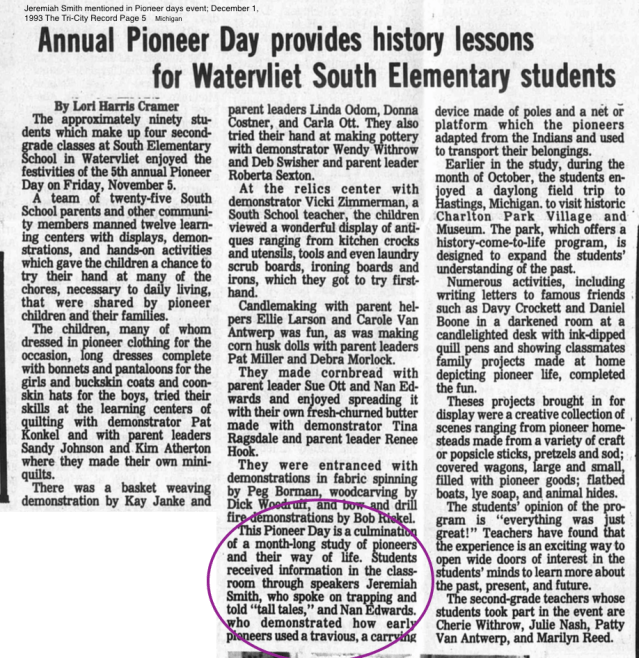
In the article below we find a fun little tidbit out about Jeremiah – when the local school in the 1990s celebrated Pioneer Day, Jeremiah Smith appeared as a trapper and teller of ‘tall tales’. Just those two words bring to mind all kinds of images and possibilities to the kind of life the family might have had.
Maybe a descendant, still living in the area, has passed this story of our grandfather down to each successive generation, or an old-timer remembered his grandfather talking about old man Smith and his crazy stories. I so would have loved to have been able to hear those tall tales.
Gertrude Cain John, sitting on the far right, Jeremiah and Hannah Smith’s great grand-daughter, at a deer hunting camp up in northern Wisconsin. She must have had some of that trapper blood.
I am always excited to find articles like these as they help to better visualize Jeremiah and Hannah’s, (and other ancestor’s) lives. They become more than just names on a page with birth and death dates. Something that is easy to forget in the data gathering of ancestors to ones family tree.
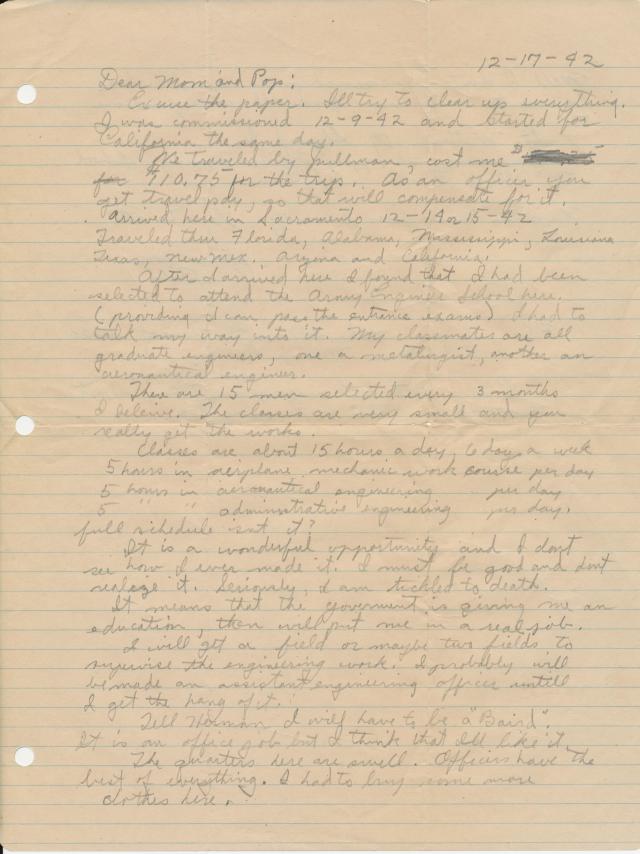
Excuse the paper. Ill try to clear up everything. I was commissioned 12-9-42 and started for California the same day.
We traveled by pullman, cost me $110.75 for the trip. As an officer you get travel pay, so that will compensate for it.
Arrived here in Sacramento 12-14 or 15-42 Traveled thru Florida, Alabama, Mississippi, Louisiana, Texas, New Mexico, Arizona and California.
After I arrived here I found that I had been selected to attend the Army Engineer School here (providing I can pass the entrance exams.) I had to talk my way into it. My classmates are all graduate engineers, one a metalurgist, another an aeronautical engineer.
There are 15 men selected every 3 months I believe. The classes are very small and you really get the works.
Classes are about 15 hours a day , 6 days a week 5 hours in airplane mechanic work course per day 5 hours in aeronautical engineering per day 5 hours administrative engineering per day, full schedule isnt it?
It is a wonderful opportunity and I dont see how I ever made it. I must be good and dont realize it. Seriously, I am tickled to death.
It means that the government is giving me an education, then will put me in a real job.
I will get a field or maybe two fields to supervise the engineering work. I probably will be made an assistant engineering officer until I get the hang of it.
Tell Herman I will have to be a “Baird” it is an office job but I think that Ill like it.
The quarters here are swell. Officers have the best of everything. I had to bring some more clothes here.
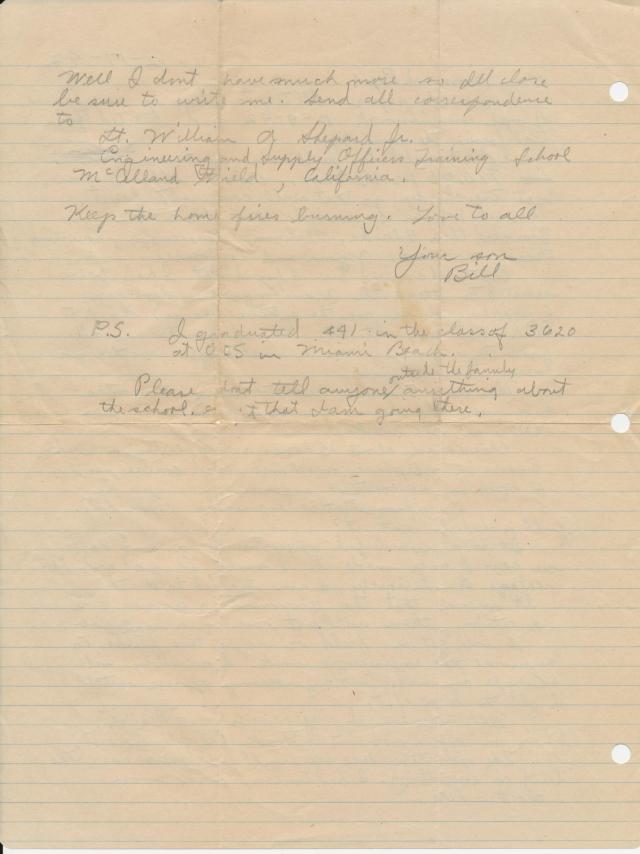
Well I dont have much more so Ill close be sure to write me. Send all correspondence to
Lt. William A. Shepard Jr.
Engineering and Supply Officers Training School
McCelland Field, California
Keep the home fires burning. Love to all
Your son
Bill
P.S. I graduated 441 in the class of 3620 at OTS in Miami Beach.
Please don’t tell anyone outside the family anything about the school ??st[Just?] that I am going there.
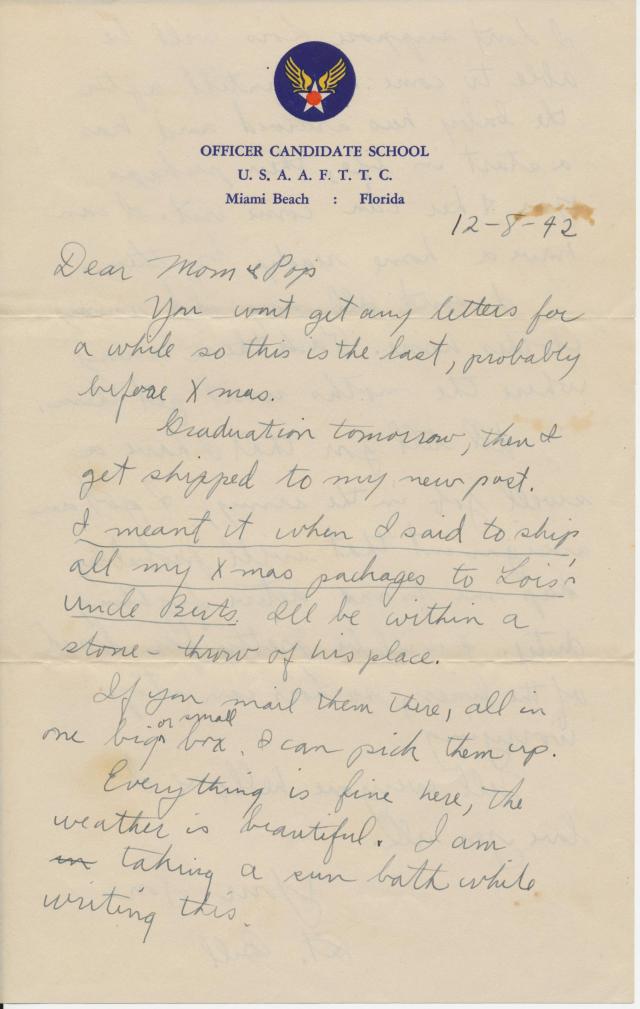
You wont get any letters for a while so this is the last, probably before Xmas.
Graduation tomorrow, then I get shipped to my new post. I meant it when I said to ship all my Xmas packages to Lois’ Uncle Berts. Ill be within a stone-throw of his place.
If you mail them there, all in one big ^or small box. I can pick them up.
Everything is fine here, the weather is beautiful. I am taking a sun bath while writing this.
I dont suppose Lois will be able to come out until after a start in life, then perhaps you & her can come out. I can have a home ready by then.
I sent all my old army clothes home. Pack them away where the moths wont get them.
Ill tell you that I have a swell job in the army, I got an assignment that will probably keep me from active fighting duty. I will be pretty far back of the lines, so Lois can stop worrying.
Received the candy and we (roomates have eaten it. Thanks a million. I am just finishing guard duty and have no news. Weather is find and I’m OK. Ill close & write some more this evening.
Well I just came of the last shift of guard duty. I will be an upperclassman tomorrow and will not be subject to guard and orderly duties. They take the guard business serious in the army and especially so along the coast.
I don’t know whether you know it or not, but I have bought my offer uniforms. They will cost about $200. There are so darn many expenses going to O.C.S. It isn’t like
being in the army as a private. We have orderly fees we pay the men who helps to hop up the hotel, and we pat about $10 a mo. laundry. Now they want us to put $25 apiece in a kitty to get class rings and throw a banquet but I don’t thin that I had better. The uniforms are really bit tailored to fit. One blouse, 4 shirts 2 pr. pants, overcoat, cap and etc. Its a good start towards an outfit.
I won’t be able to get a leave to come home. They have cut them out. I won’t get one until I have been in the army 3 mo as an officer.
I don’t know where I will be and won’t know.
If you can get gas you should come down for my graduation. It will be about Dec 5-10. Don’t bring the car unless you can get the gas because it is dry here.
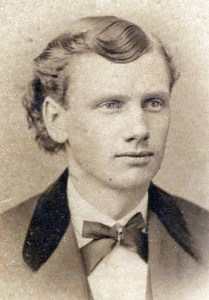
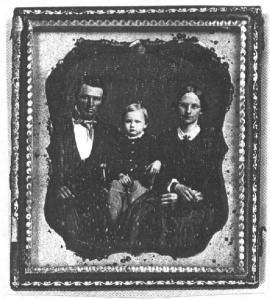
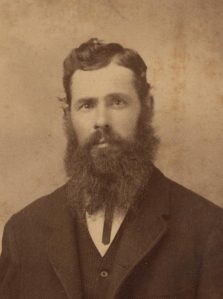
Dillon Franklin Hatch, probably about the age he wrote his speech. His parents are in the next photo.
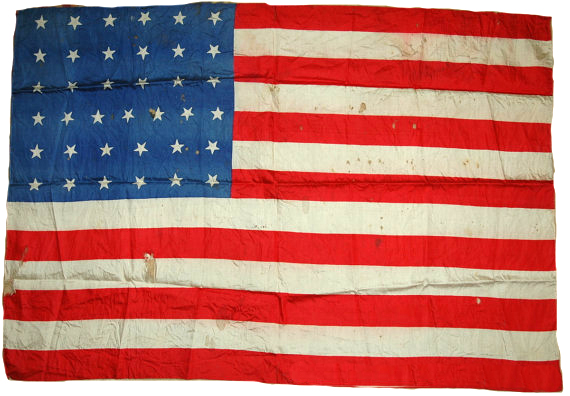
In 1867 at the age of 18 Dillon F. Hatch, my g-g-grandfather, wrote a patriotic speech which he possibly gave for a class. We are lucky enough that one of our Shaw cousins has this speech and made copies for others to enjoy. So, I thought that this would be a most appropriate post for the upcoming 4th of July celebration.
First a little background on Dillon. He was born in Grand Isle County, Vermont in 1849 to Oscar Hatch and Olive Robinson. His parents were decently well off members of society, so he received a very modern, thorough, education. He even kept a diary for a short time and practiced his writing in it, something for which he received high marks in school.
He probably apprenticed as a carpenter in his younger years, as he eventually went into the furniture making business. His repertoire included windows, and doors (one of his patented designs was in a previous post on my blog). Sometime in the 1880s he moved his wife, Almira (Brooks) and their children to Ohio, where Dillon managed a large furniture factory until he retired.
He never fought in any wars himself, his age, (too young, too old), would always get in the way of any patriotic fervor he might have had.
The speech that we have here was written in honor of the soldiers who fought in two wars: the Revolutionary War, and the Civil War, which had just ended two years earlier.
I am including a .pdf file of the complete speech in his own handwriting (albeit a photocopy). But below, for easier reading, I am giving you the transcribed version. He had many misspellings and poor punctuation, I tried to keep those errors in the transcription, however, sometimes autocorrect fixes those things, so I can’t guarantee the accuracy of the ‘errors’. Note: because of the time period in which he is writing this speech he does use the term ‘Negro’ when discussing the Civil War, I did not change it to a more appropriate or politically correct term, as that would be presumptive and just plain bad history. Just know that he is not using the term in a derogatory manner and is a reflection of the time period .
Dillon F. Hatch Oration, Delivered at Williston[?] May 9th, 1867 by Dillon F. Hatch
The Soldiers of the Republic The present generation owes a debt of gratitude to all who have preceded us, but none, a greater debt than to the Soldiers of the Republic, those who fought and bled for their county’s cause who willingly sacrificed their lives in its defense. This of what our fathers endured to build up this great Republic when they were weighed down by the power of a tyrant whom they so bravely resisted and whose power they threw off , and thus became an independent nation. how staring are those memories of the Revolution, how precious the names of the actors on the theater of war, in the times that tried mans souls. With pride and gratitude we think of Warren, who, when offered the command of different parts of the field at the battle of Bunker Hill, refused, saying that he came out to fight as a common soldier, and not to command, and fighting as such he nobly fell. Warren Putmann, Pomeroy, Stark, glorious names that were not born to die. There were instances in our late war of the Rebellion of unselfish devotion to country such as is seldom seen. Such was the devotion of Ellsworth, assassinated in the very act of raising the Stars and Stripes and of trailing the Rebel flag in the dust.
We honor such as the true, noble, soldier of the Republic. But what do we owe to them. There are very few who really understand and appreciate this.
Look and behold the bright and peaceful homes scattered throughout the land, for their preservation the soldier willingly shed his blood on the field of battle. But let us compare our soldiers with those of other nations. When war was declared between Great Briton and the colonies the nations look upon it as merely an out-break of some inferior power and not requiring much force to put it down, but they are mistaken, they found a nation of soldiers though not, perhaps, as well drilled as some pf the old soldiers of the European armies but they are men that were used to hardships, and toil, and they fought fearless of danger, in defense of home and country, which they loved as life its self. In this they differed greatly from those of other nations. I do not mean to say that the people of other nations do not have this love for their county, for I do not think a nation could long exist were it not for that. But the great difference is this; our soldiers come from the people to defend their homes, instead of being those who fight for pay.
How the nation was moved by the fall of Fort Sumpter. The nation as one man, rose demanding retribution for the act, and they sought it by hurling thousands of men down upon them which crushed them out in a few year’s of war. But it was love of freedom that helped to do this more than any thing else, freedom that great boon which all men seem striving to attain. There is nothing like ones fighting for freedom and home, to bring out all the bravery and courage of the soul. A man hitherto thought to be very timid, will sometimes under the circumstances perform deed’s which seem almost incredible. No love is stronger than that for home and father-land, and it was because of this love of home that our citizen’s rose up in such numbers to defend heir altairs and their homes. (Switzerland in this respect, is most like our own nation. It stands surrounded by Empires and Kingdoms as a monument to freedom it cannot be conquered, nor can or own.) The American nation is alive at the heart and could not be destroyed by a war of centuries. The Rebell’s were actuated[sic] by an impulse to save their homes from destruction, they thought our northern soldiers would bring upon them. The lower class supposed for a time that our soldiers were bands of lawless robbers and murders, but they found their mistake after our army had passed through the country.
We have an illustration showing how love of freedom nerves the arm of the soldier in battle, in the use of negroes as soldiers in the late war. When they were first used by Fremont in Missoura, nearly all of the citizens of that state and of the other states answered him severly, because of it, and even the President refused to let him use them as such, but it was not long before they found that it was a very great mistake. Negroes became after a while some of the best and bravest soldiers in our army. The Rebells soon learned this and tried the same thing, but it did not succeed as well with them as with us, for the reason that they were fighting for their freedom when fighting with us, but when they were on the other side they were only fighting in defense of slavery that great evil they were trying to escape, and thus they fought with us for freedom and found it.
Honor to the soldier. Let his name be cherished let his children be nourished by the Republic let his lonely widow have no occasion to call in question the gratitude of the nation, let the sod be green over his grave, and let the marble colum and granite shaft rise all over the land to perpetuate the name and the noble deed’s of the American Soldier.
George Hamm, Sr. was baptized 2 days after he was born, as the illegitimate son of Elisabetha Knobloch. His father wasn’t named. I have always assumed that Jacob Hamm was his step-father and the relationship was a close one, only because George took the Hamm surname by the time he was confirmed at the age of 13.
Now, however, I have re-thought this assumption. It is entirely possible that Jacob was his actual father, and Elisabetha and Jacob didn’t marry until after he was born. The reasons for this possible delay in marriage can be seen below:
Sometimes, they didn’t have the money to pay the marriage fee. Other times, the church was far away or the pastor wasn’t easily accessible. Some German states, in an effort to control the booming population, placed legal restrictions on marriage, making it more difficult. And sometimes, the couple simply didn’t feel that much concern about whether marriage or children came first. Peasant society had its own marriage customs apart from the customs of the state church. In earlier times, the community had viewed living together, making a commitment to one another, and especially having children as basically equivalent to getting married. Despite valiant efforts by churches, stamping out traditions and convincing people to first perform the ceremony in a church proved difficult.1
I have heard this information several times over the past few months from different sources. If the birth was illegitimate the mother’s name is the only one that would be listed. Which is why even if everyone knew who the father was, the church didn’t bother to put that information down because they weren’t married.
It has been estimated that illegitimate births may have comprised around 15% of overall births, depending on living arrangements, on laws relating to marriage, on poverty rates, on customs concerning women’s work, and other social factors. Many of these illegitimate births were legitimized by the subsequent marriage of their parents. Christening records may have the abbreviation pmsl, standing for per matrimonium subsequens legitmata (or legitmatus, depending on the gender of the child). This notation indicates that the premarital child of a couple was legitimized by the subsequent marriage of its parents. Generally, the mother’s name was crossed out and the father’s name substituted, a procedure frequent in the 19th century. The Church considered illegitimacy to be immoral, and recorded all deviant behavior. Often ridicule, shame and mockery were aimed at the mother. At times, clergymen recorded illegitimate births/christening upside down in the church books.2
I never saw the initials ‘pmsl’ on any of George’s records, but, I don’t have his christening record, only his baptismal record. So unless I can do a yDNA test of the known male HAMM descendants of Jacob and his possible son George, I won’t know for sure who his father is. But, right now, I am not ruling out Jacob.
So the two reasons I am leaning to the relationship as that of father/son, because Jacob and George wrote to each other, and Jacob appeared to covet the letters that he was sent, as indicated by his son Fritz’s letter to George; and because of recent information I have come across regarding marriage in Germany at the time he was born. Fingers crossed.
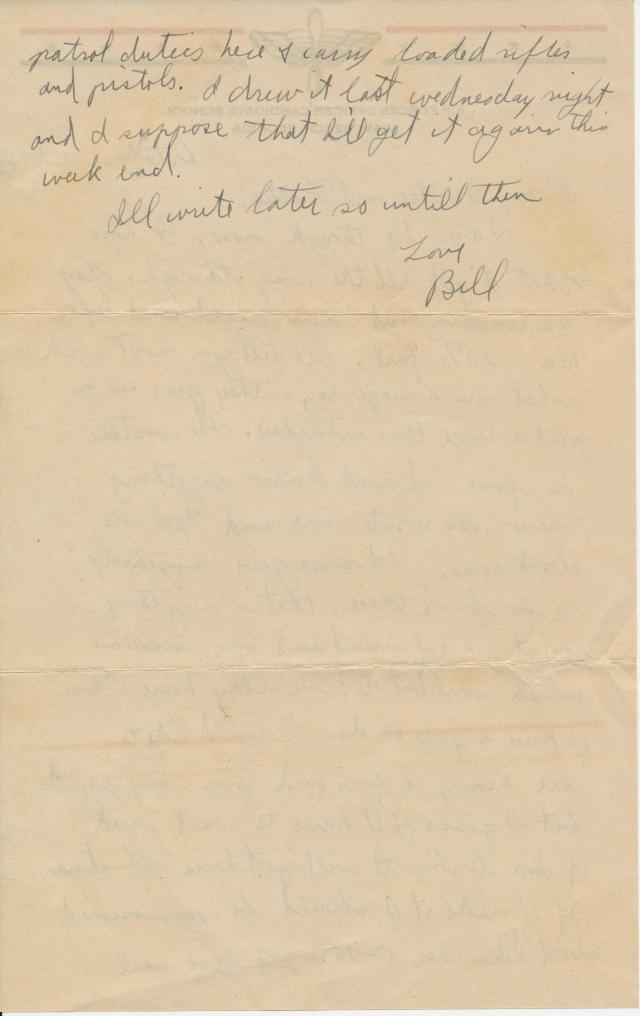
I am 1/4 through now. I hope that I get all the way through. They are washing out men right and left here. 20% fail. Ill tell you next week what my average is, as they give us a point average this saturday. The weather is fine. I dont know anything new, so write me and tell me about home. Id sure give anything to be back there, that is anything except peace of mind and my conscience which wouldnt let me stay home when I have a job to do. I would like to see Kenny & Lois and you, my parents but I guess I’ll have to wait, and if Im lucky I will get home Christmas. If I make it I should be commissioned about December 5-10. We have real
patrol duties here and carry loaded rifles an pistols. I drew it last wednesday night and I suppose that I’ll get it again this week end.

 about Cousin Frank. He was married and divorced twice. During the first marriage he went to court asking for a divorce; he was tired of his wife always accusing him of being with other women. Which she did. A lot. The judge said, “Sure you can have a divorce.” The second time he was in court was because his second wife was asking for the divorce, she was tired of him always being with other women. Which he did. A lot. He was a popular customer at the local brothel, and he had an African American mistress. A very renaissance man. The judge told Frank’s wife, “Sure you can have a divorce.”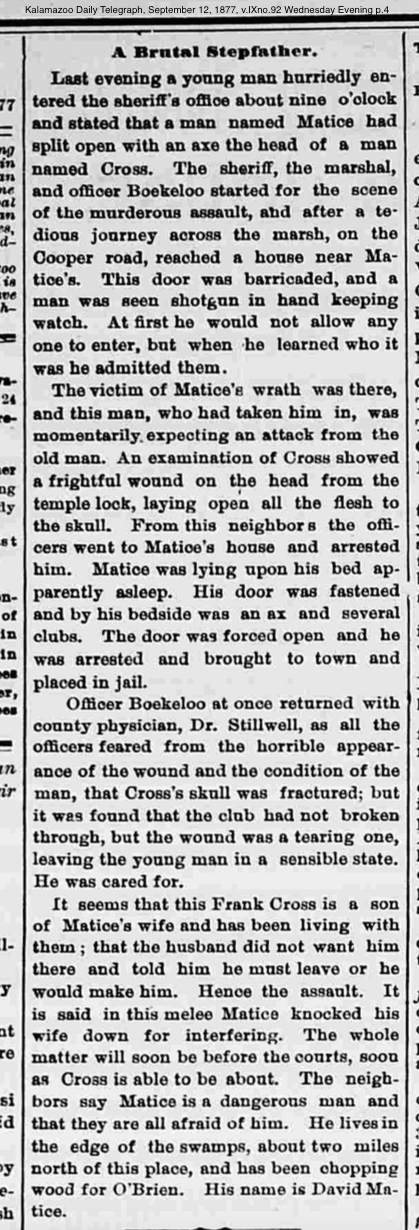



 10/27/42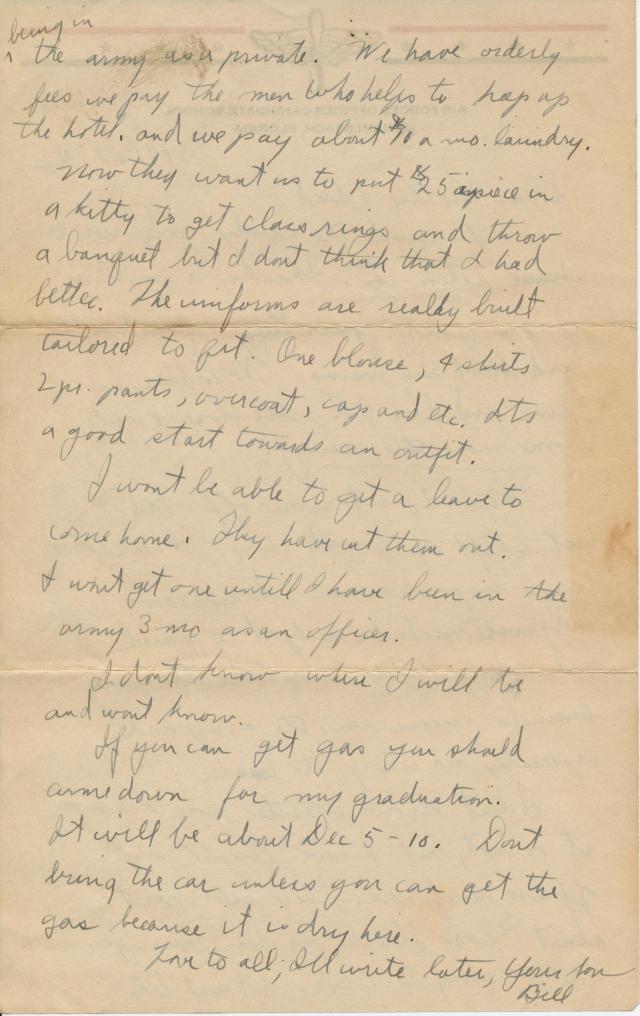
 First a little background on Dillon. He was born in Grand Isle County, Vermont in 1849 to Oscar Hatch and Olive Robinson. His parents were decently well off members of society, so he received a very modern, thorough, education. He even kept a diary for a short time and practiced his writing in it, something for which he received high marks in school.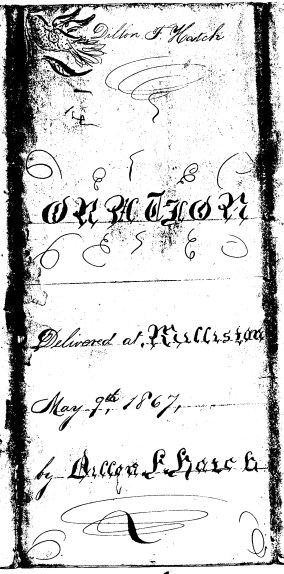
 George Hamm, Sr. was baptized 2 days after he was born, as the illegitimate son of Elisabetha Knobloch. His father wasn’t named. I have always assumed that Jacob Hamm was his step-father and the relationship was a close one, only because George took the Hamm surname by the time he was confirmed at the age of 13.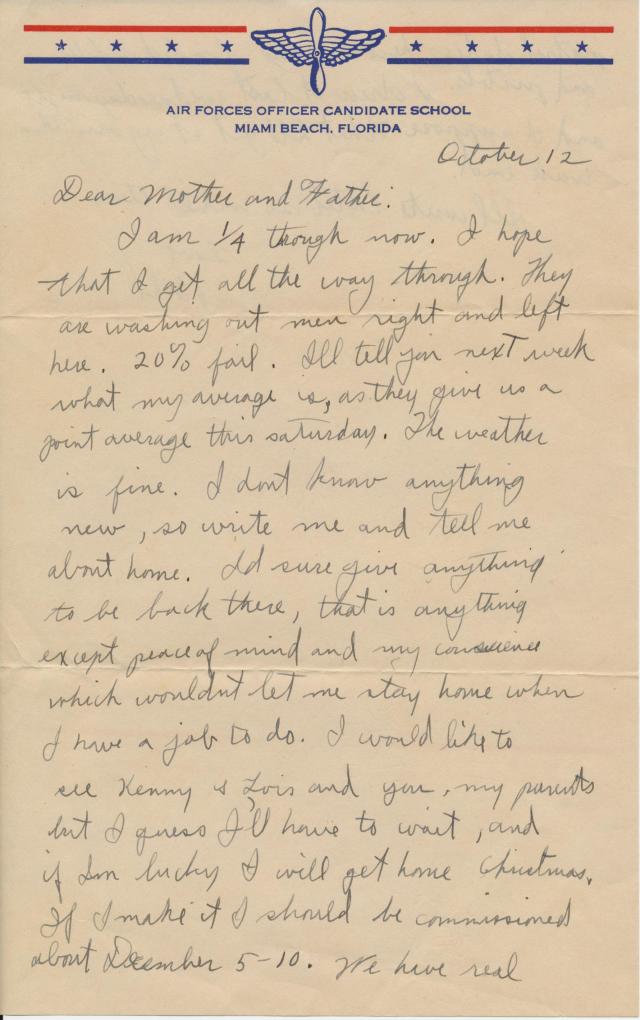
 jen's ancestors