Dear Mother and Dad;
First time that I have had time to write for a long time. Please send me the following if you haven’t already,
all if any of my white underwear
3 pr. new work sox, also my sweat sox.
handkerchiefs
house slippers
Picture of the family and one of Kenny
Well thanks for the bother, I suppose I’ll get the swimming suit today, but the mail is a little bit erratic.
We have been drilling just about all the time and its getting hotter here. I think Ill go swimming tomorrow and cool off. Tell Charlie & Lydia I have 3 pals from Marion Theodore Ochs, Underwood and Burr. they are O.K. I also know quite a few fellows from Dayton.
Tell me about home when you write again & say hello to Dad and if he dont read this.
Ill have some time later if you come down. Aug 1 will probably be a busy time for me but I can get a few evenings off. Well Ill close now. Tell Ruth & Herm hello
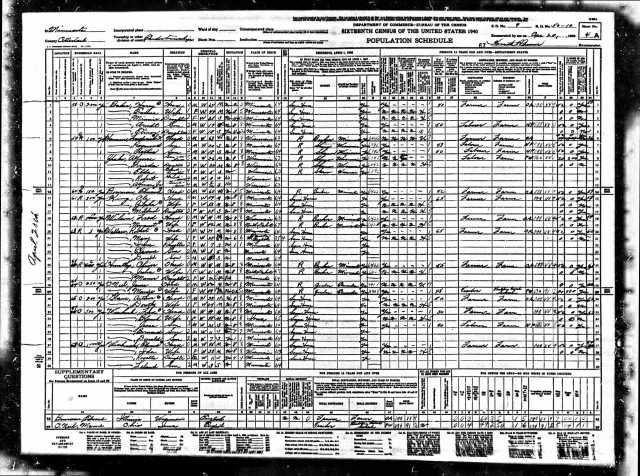
Hurray! Miracle of miracles, I have finally found the elusive Fred Hamm in the 1940 census, something I thought was impossible. And, I wasn’t really even looking for him, I was looking for his son Arthur Albert Hamm.
1940 United State Federal Census, Candor, Ottertail County, Minnesota. Almost to Fargo.
Interesting bits of information can be gleaned from this census. One of the questions asked was where was the person living in 1935. According to Fred, he was in Becker County, Minnesota around the Detroit Lakes area. Arthur and Raymond are living with their father in this census, and in 1935 they had been in Shawano County, most likely with their mother Emma, (who died in 1943).
We know that sometime later in 1940 or early 1941 Fred moved to Door County, Wisconsin where he was working as a Cherry picker ,and possibly farming, until he died in 1951.1 Raymond and Arthur probably moved with him to Door County. It wasn’t long after that both boys joined up – WWII had gotten into full swing.
Fred Hamm’s obituary from Door County indicates that when he died he had been living in the area for 11 years.
Because I want to keep things lively on my blog I have decided to enhance my blog posts with letters. So starting today I am going to be transcribing old family letters. I will post only one at a time. Some might be boring, some cute, some short, some long. Either way I thought it would be a fun way to add interest to the old blog. This will generally be in addition to my regular weekly posts, or occasionally the post for the week. Although I think if there is a dearth of family gossip to post about I will share several letters in a given week.
I am going to start this week off with Dick and Dad’s letters. The earliest ones we have are those that my grandfather wrote in the early 1940s just after he had signed up in the military and was finishing up his school.
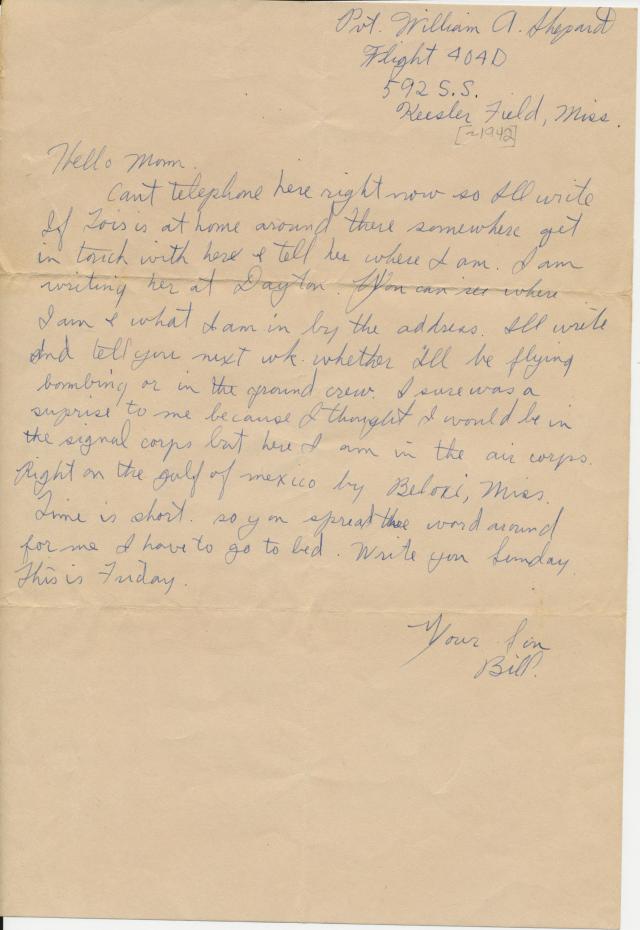
This particular letter has no exact date, it it believed to have been written in about 1942.
Corrections from readers are always welcome. Also I will be transcribing the letters as read – including no punctuation, comma’s etc, as best as I am able; sometime habit makes it hard to deliberately make mistakes.
Pvt. William A. Shepard
Flight 404D
592 S. S.
Keesler Field, Miss.
Hello Mom,
Cant telephone here right now so Ill write if Lois is at home around there somewhere get in touch with her & tell here where I am. I am writing her at Dayton. You can see where I am & what I am in by the address. Ill write and tell you next wk whether Ill be flying bombing or in the ground crew. I sure was a surprise to me because I thought I would be in the signal corps but here I am in the air corps. Right on the gulf of mexico by Biloxi, Miss. Time is short so you spread the word around for me I have to go to bed. Write you Sunday. This is Friday.
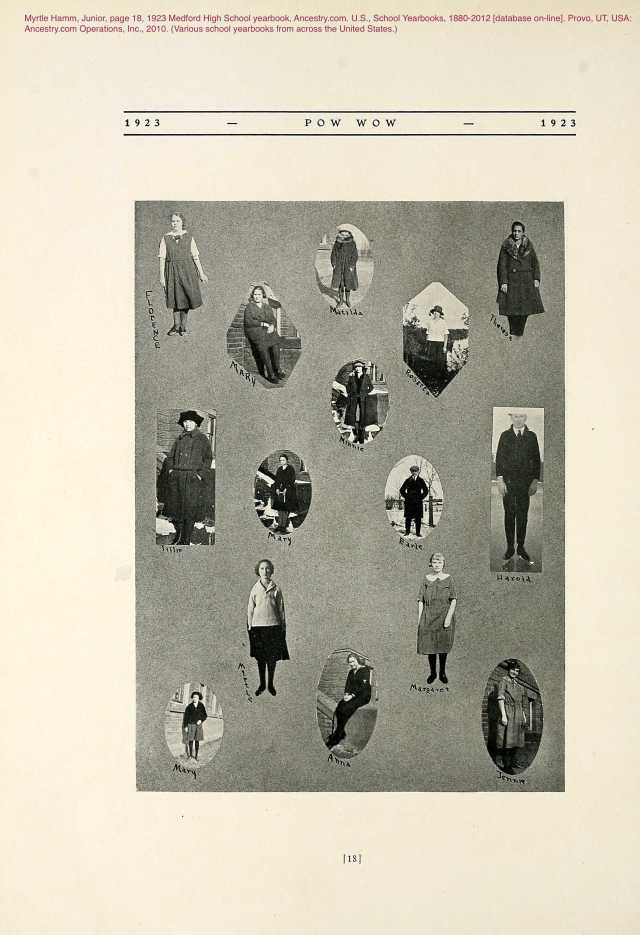
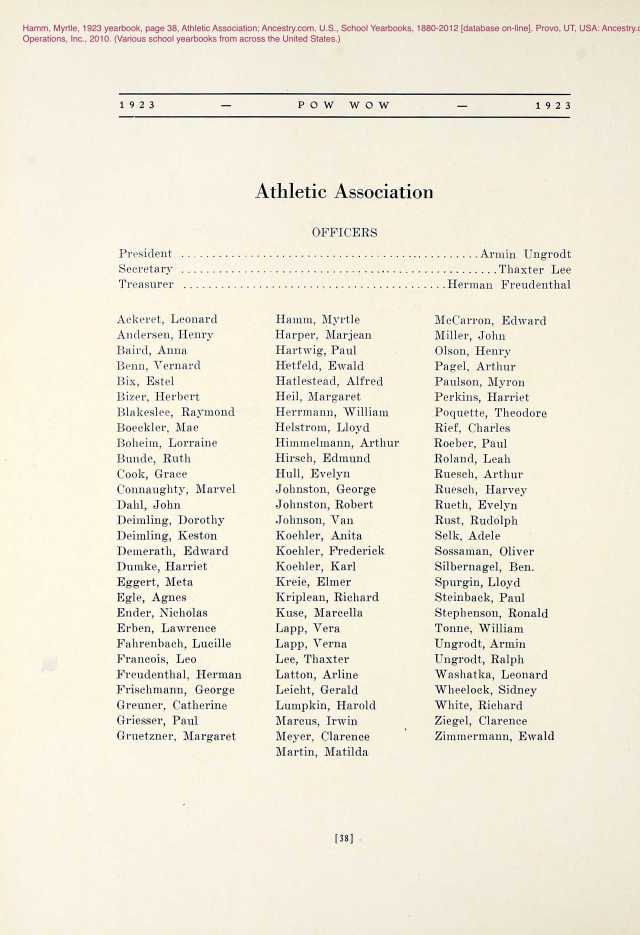
Here is a totally cool find for my grandmother Myrtle Hamm in the 1923 ‘Pow Wow,’ the Medford High School yearbook (Medford, Taylor County, Wisconsin). She would have been about 16-17 years old that school year, and a junior. According to the entries found, in this particular yearbook, she was in the Athletic Association and the Commercial Club.
She looks so adorable. In this first image she is second from the bottom far left, her name is written by her image ‘Myrtle’. These yearbooks are wonderful for folks who don’t have pictures of their ancestors otherwise. The image quality is not the greatest, but I bet I could get a better image from an original book in Medford. All these images were found at ancestry.com, where they are amassing quite a collection of yearbooks in their database.
Now I think I know where I get my narrow shoulders from!I think I see her in this image. Can you find her?
According to John Brooks, jr.’s obituary, printed in the 1898 Albany paper, another item of interest was mentioned: that he had attended the Albany Academy.
The Albany Academy was chartered in March of 1813 “to educate the sons of Albany’s political elite and rapidly growing merchant class” (according to wikipedia). In the case of John this would appear to be true because his occupation and trade was cigar manufacturer, definitely of the merchant class.
As the Academy is actually still a functioning school, I was able to contact the archives to try to find more information regarding its academic program, and if there were any record of John Brooks having attended.
Unfortunately at this time, no records have been found that can corroborate this claim. I don’t doubt that it is true, but can’t confirm. According to the gentleman who contacted me in response to my inquiry:
“The youngest students of the 1820s were about 10 years old. Their programs were anywhere from a few quarters to eight years. They selected either a classical or “English” program.”
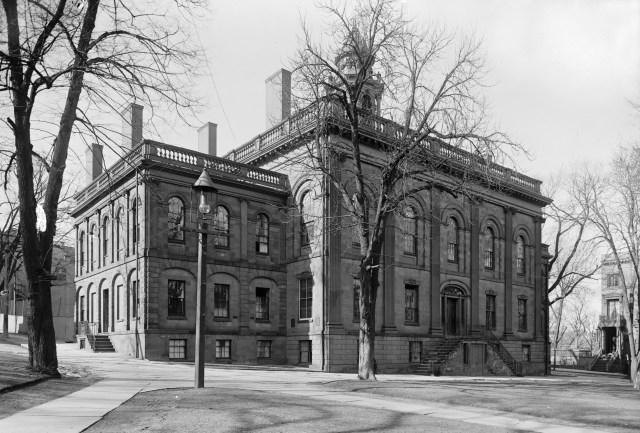
This the original building, which is now used as the Joseph Henry Memorial.
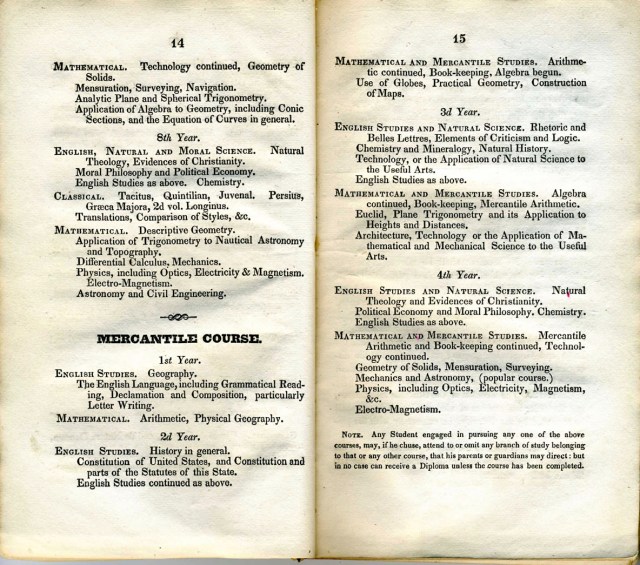
A copy of the Academy Statutes was provided to me and it makes for some light amusing reading regarding expected behavior of the students. Below is a page pulled from the statutes giving an example to some rules. They seem pretty consistent with rules for students today, with some exceptions, of course.
John probably took the mercantile course which lasted four years and included the basics along with mercantile studies – ex.: accounting, book-keeping, etc.
Here is the page covering the 4 year Mercantile course. The whole Academy pamphlet makes for interesting reading.
The family was in the business of cigar manufacturing until John passed way in 1898. His son John was a saloon and pool hall owner. I don’t think he was much interested in continuing the trade. His daughter Almyra married a furniture manufacturer and had moved to Ohio. The other children had died before John, or were daughters who married and moved away, so the business pretty much died when he did.
Fun little note: Andy Rooney attended the same academy as did Theodore Roosevelt III.
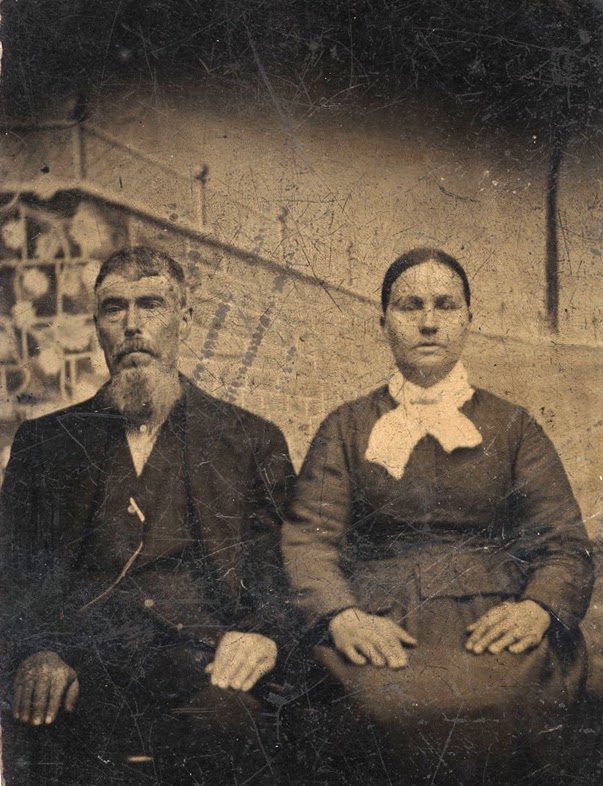
This is most likely a picture of William Buchanan and Margaret Mobley.
A while back in my research I was investigating the parents of Jane Buchanan, because while much research was done on the Buchanan line and I could fill it out pretty well, I didn’t have much on her mother’s side in my files. Even my grandfather’s research records gave her short shrift, all I could find in his records was her first name Margaret.
Through time and much effort I have been able to flesh out Margaret’s origins. Origins of which bring a more prominent role of Quakers into the family and, as I knew would happen sooner or later, slavery.
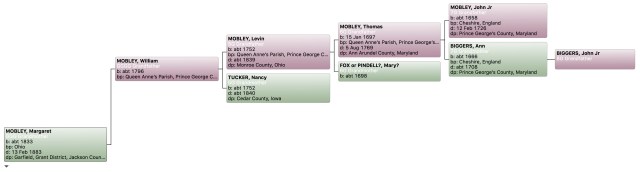
When I started my research on Margaret I did have a good starting point because her birth name is found on her daughter Jane’s death registration. Using that information as a guide I found Margaret’s death registration, along with her husband’s on the same page, in the records. Thankfully her parent’s names were also recorded in the death record, which doesn’t happened all the time. They were listed as William and Sarah Mabley, (which should have been Mobley).
The search for William and Sarah Mobley led me to Monroe County, Ohio where a marriage registration is found for William Mobley and Sarah Millison in 1825. This record seemed the most likely and fits in with the approximated 1833 birth year for Margaret. I was pretty confident that this line runs true and so continued my research following this trail’s bread crumbs.
As I ventured further and further down the rabbit hole of the Mobley line I eventually ended up in Maryland. It was at this point that I immediately knew I wasn’t going to like what I was going to find. You see once your research takes you certain parts of the country in certain periods of time, slavery is going to rear it’s ugly head, and it did.
There are a few publications and websites dedicated to the Mobley surname to be found out in the world, so I have been able to fill in lots of blanks pretty well regarding the first few generations in America. Some sources are still suspect, which is to be expected. (An unfortunate habit of many early genealogy surname history books is their tendency to spend several chapters talking about the family crest, or how the surname is somehow of ‘upper crust’ descent. All very silly and pretentious, and these Mobley histories are no exception.)
It is believed that the earliest Mobley documented with confidence is John Mobley, jr. who was most likely born in England and emigrated in the latter part of the 1600s to America, settling in Anne Arundel County, Maryland. The surname in England was generally known as Moberly or various other iterations.
John was born about 1658, possibly in Cheshire, England. When he was about 30 years old he married Ann Biggers on the 21st of Oct 1686, in Maryland. Together they had five boys. The youngest boy, Thomas, was our ancestor. He was born on 18 Jan 1698 in All Hallow’s Parish, as were all the other children.
John was a planter, and living in Maryland his main crop was tobacco. Not surprisingly his main labor force was slaves and possibly indentured servants, although we have no record of such. Besides, indenture was so 1600s, enslaving Africans was all the rage now.
In the early days of Africans being involuntarily brought to Maryland, they could actually work off their indenture and become free. Apparently this annoyed the rich white folks to no end, so in 1664 an act was passed in the Maryland Assembly that once a slave always a slave, and any child of a slave automatically became a slave when born, and could expect the same treatment. To make matters even more depressing, in 1753 they passed another assinine law, this one forbade owners from manumitting their slaves at all. So even if they wanted to free a slave they couldn’t.
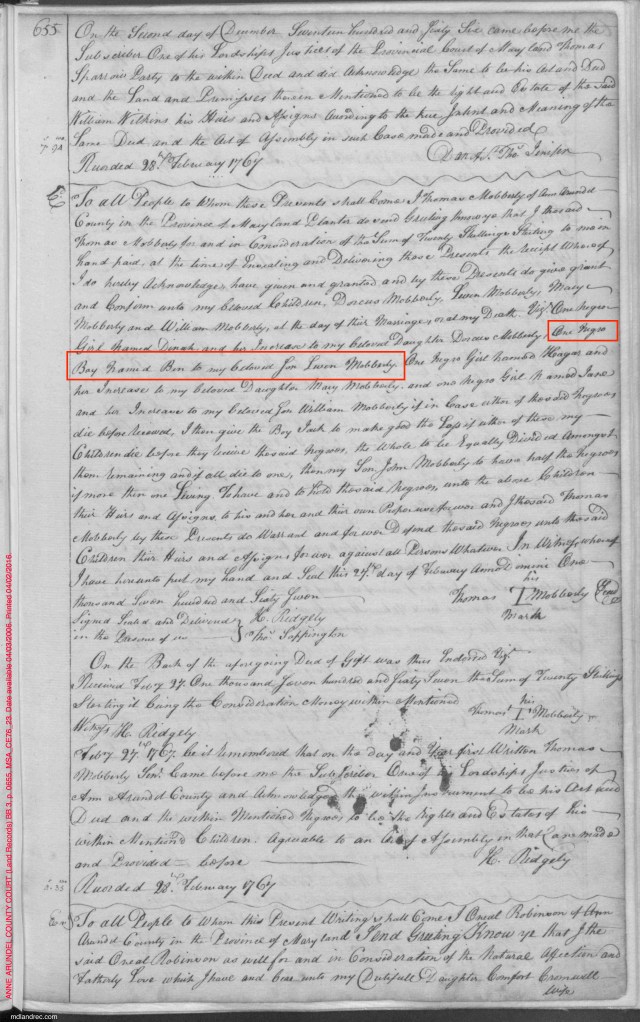
Several years before Thomas died he had made out a deed of gift for his younger children.
The boxes area in the image says “One Negro boy named Ben to my beloved son Levin Mobberly”, Levin is our ancestor, who had William, who had Margaret.
Here is a transcription of the relevant parts of the document:
.”..hereby grant unto my beloved children, Dorcus Mobberly, Levin Mobberly, Mary Mobberly and William Mobberly, at the day of their marriage, or at my death. Viz. one negro girl named Dinah, and her increase to my beloved daughter Dorcus Mobberly, one negro boy named Ben to my beloved son Levin Mobberly. One negro girl named Hagar and her increase to my beloved daughter Mary Mobberly and one negro girl named Jane and her increase to my beloved son William Mobberly. If in case either of the said negroes die before received, I then give the boy Jack to make good the loss if either of these my children die before they receive the said negroes, the whole to be equally divided amongst them remaining and if all die to one, then my son John Mobberly to have half the negroes if more then one living. To have and to hold the said negroes, unto the above children their heirs and assigned to his and her and their own proper use for ever…”
I made a promise to myself that when I did run into the issue of slavery in our family, which I knew I would, there would be no glossing over the issue, and in the best way I know how I will try to give voice to those persons whom my ancestors owned like cattle. So here I give their names: Dinah, Ben, Hagar, Jane and Jack.
Thomas’s son Levin moved his family to Ohio between 1810 and 1820 at which time they can be found living in Belmont County. One good thing I can say about Levin is that in the 1800 census there is no notation that his family owned slaves, so either he sold them to family or others, or freed them, and whether his lack of slaves in the census is due to economics or personal belief I do not know. I am just glad that at this point on, in our Moberly line, the owning of slaves has ceased.
A note of interest regarding Thomas Mobley/Mobberly, you can see that he left his mark of a pretty capital “T” as his signature on the deed of gift document. This indicates that he was not a formally educated man. He could probably read, but most likely didn’t write.
The family doesn’t appear to have invented any wondrous devices, written any novels, or left any big impact on history. They were tobacco farmers, owned slaves, were born, had children, died. When the country was opening up the next generation started to spread out heading south and west. Where we find Margaret, first in Ohio and then finally settling in West Virginia. It is here that she left her legacy to her four children: Jane, Rebecca, Ebenezer, and Sarah Buchanan.
I made a promise to myself to try to post a minimum of one article a week to my blog for two reasons: 1. it is good practice, 2. it keeps my audience interested. Keeping this promise has become more challenging since my work situation has changed – more hours at work means less hours able to indulge in researching for my blog. So some of my articles in the future might be a little shorter than normal, like this one, which was more of a fun indulgence.
Last weekend the TCM channel was showing mostly Steve McQueen movies. I have always enjoyed his flicks and decided to kick back for a few hours and enjoy. Only this time I really thought about his name. McQueen.
Why not? That’s when I decided to find out if he was a long lost cousin.
The process took a short while, learning about his childhood was rough. It wasn’t a good one. He also had issues of violence with his wives. Not good, but I could see why. And he died very young. Cancer. Nasty stuff that.
So the nuts and bolts of my search? Yes, possibly, Steve McQueen is a cousin. There are trees online that have him descending from Dugal’s son Thomas, (as do I), only we part ways on the family tree at this point because I descend from Thomas’s daughter Elizabeth and Steve descends from one of her brothers. However, there are others who dispute this connection. Neither offer evidence either way.
A nice definitive answer. But, that won’t make me enjoy his movies any less!
I will not be pursuing this research any further, as it was merely a curiosity while I waited for my popcorn. Time to get back to my movie.
We are lucky in our family to have lots of bits and pieces from our John and Hamm families. One of the pretty cool items that was found in this treasure trove is this article:
I have been unable to track down exactly when this event happened, as it is most likely that the newspaper this article appeared in hasn’t been digitized yet. I am guessing that Clarence was in his late teens to about 2oish, as he is talked about as the son of Mrs. and Mr. V. H. John, which tends to make me think he is still a young man and not on his own yet.
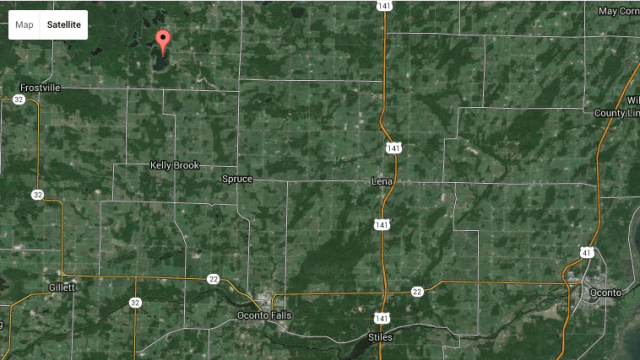
Kelly Lake was, and still is, a hot spot for folks vacationing in Oconto County. The size of the lake makes it a great place to boat, fish, swim, all those summer activities that you think of when you hear someone saying they are ‘going up north.’
The red pin on the map market the location of Kelly Lake, Gillett and Oconto are on the map so one can see its location in relation to the two cities.
I am glad that my grandfather was there that day to be a hero. As, I am sure, was the lady in distress.
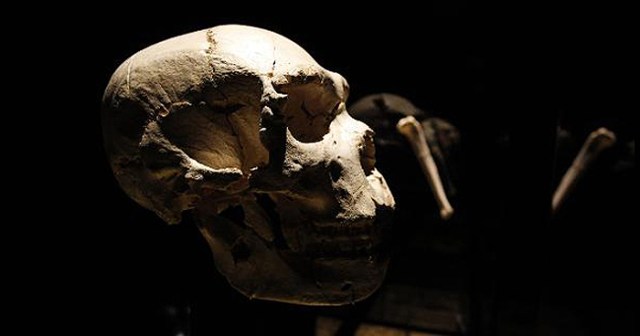
Very rarely do I repost articles on my blog, but sometimes a subject of particular interest just cries out to be shared. In this case the article of interest is discussing DNA and the history of the human race. The headline pretty much sums it up:
This image is from the Bradshaw Foundation website with no citation.
This is what I love about genetics, with each new discovery we are learning more and more about our origins, how we migrated across the planet, when we started passing on the traits that make us different from each other, yet how we are all still the same. Fascinating stuff.
About a month ago I received my American Ancestors magazine in the mail and last weekend I decided to finally get it off my reading pile. The magazine is part of my membership in the NEHGS (New England Historical and Genealogical Society), along with The Register. It is very rare that any surnames of interest to my particular research ever pop up in these publications. So imagine my surprise when I am reading along in the ‘Genetics and Genealogy’ section, when the combined surname and location they are writing about starts bells dinging in my brain. I pulled out my trusty iPad, loaded my ‘Reunion’ app, and searched away. Sure enough there they were, exactly as I thought.
Once again Esther Newell brings some cool factoids to the Shaw line.
As I have mentioned before to my reader, we have at least four ancestral Smith lines in my family, (maybe even five, I keep losing count). The particular Smith line I was reading about in this article was in regards to the Smiths of Hartford and Farmington, in Hartford County, Connecticut.
Esther Newell’s mother was Abigail Smith. Abigail’s parents were John Smith and Abigail Wadsworth, and it appears that this John Smith was the great grandson of the Quaker emigrants Christopher Smith and Agnes Gibes who had emigrated and settled in Rhode Island.
In my own research on this particular line I could only find as far back as William Smith b.1617 who married Elizabeth Stanley[?] in 1644 in Hartford, Hartford County, Connecticut. This new information gave me another generation and place of origin, proven by DNA and church records. Hence the title of the article I had been reading ‘Genetics and Genealogy.’
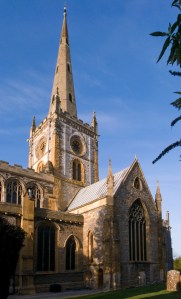
Of course none of that is the really cool part. It appears that these Smiths came from Stratford-upon-Avon, Warwickshire, England. If the place seems familiar, how about this – Shakespeare anyone? In fact, Christopher and Agnes were married on the 1st of May, 1616, in the same church that William Shakespeare had been buried about a week prior.
Church in background where the Christopher and Agnes were married.
So what was this article about? The focus of the article I was reading was connecting two Smith families, the Hartford Smiths of Connecticut and the Providence, Rhode Island Smiths. Were they related? And if so, how? There is a SmithConnections Northeastern DNA Project found at FamilyTreeDNA that is trying to sort out the many different Smith lines that show up in New England. Christopher’s line is labeled NE18 in this database, and it appears that 23 different participants match his yDNA. The descendants of the Hartford Smiths match each other, and Christopher’s yDNA, so Christopher must be of some kinship to the Hartford matches. It was assumed he was a cousin.
This is where documentation comes to save the day. One of the authors of the article had learned of the marriage record of Christopher and Agnes found in The Registers of Stratford-upon-Avon, in the County of Warwick Marriages, 1558-1812, and it was online. They proceeded to check on the baptisms and burials in the book and found two of the known children of Christopher and Agnes, so no surprise there. But then was shocked to find all the Hartford Smith names listed in the book too, as children of Christopher and Agnes.
Their eldest child, William Smith, bap. 1627 in Stratford-upon-Avon, is our line of descent from Christopher and Agnes. (William’s sister Mary married a Partridge, and his sister Susanna married a Wilkinson, both surnames that are also in our tree.) So the mystery of the connection of the two families was solved.
Apparently, the most curious question about the family, that hasn’t been answered to anyones satisfaction, is why were Christopher and his wife Quakers, and none of their children had any such affiliation. Well, that and the fact that the two generations appeared to have separated, with no documented connections appearing in the records in America. Maybe their religious differences split them up.
I guess there will be more to read about this family in a future publication. I look forward with great anticipation to reading it.
Source: Genetics and Genealogy: William Shakespeare and the Christopher Smith Family, by Kathleen Cooper Smith and Christopher Child; American Ancestors, volume 17, no. 1, page 50-53.




 Last weekend the TCM channel was showing mostly Steve McQueen movies. I have always enjoyed his flicks and decided to kick back for a few hours and enjoy. Only this time I really thought about his name. McQueen.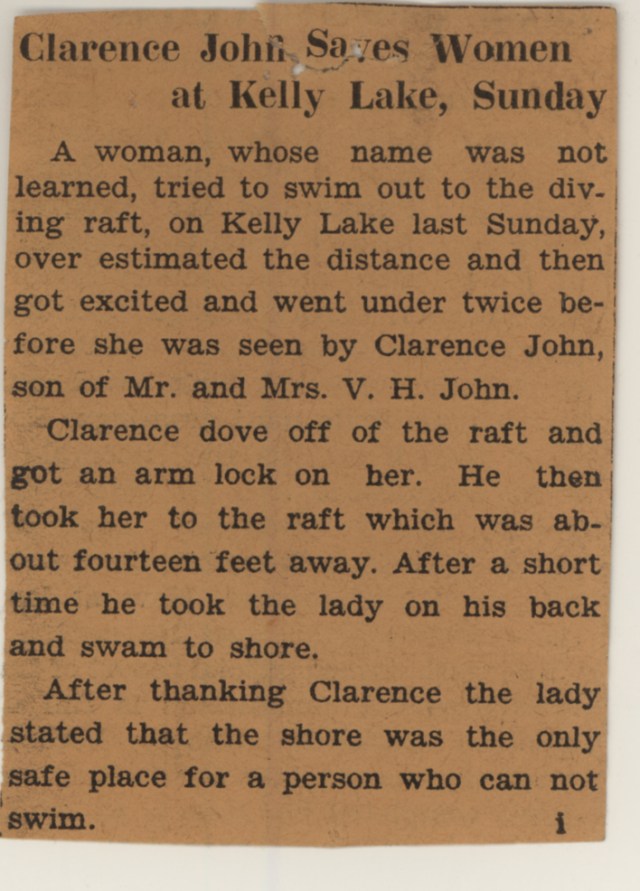
 About a month ago I received my American Ancestors magazine in the mail and last weekend I decided to finally get it off my reading pile. The magazine is part of my membership in the NEHGS (New England Historical and Genealogical Society), along with The Register. It is very rare that any surnames of interest to my particular research ever pop up in these publications. So imagine my surprise when I am reading along in the ‘Genetics and Genealogy’ section, when the combined surname and location they are writing about starts bells dinging in my brain. I pulled out my trusty iPad, loaded my ‘Reunion’ app, and searched away. Sure enough there they were, exactly as I thought.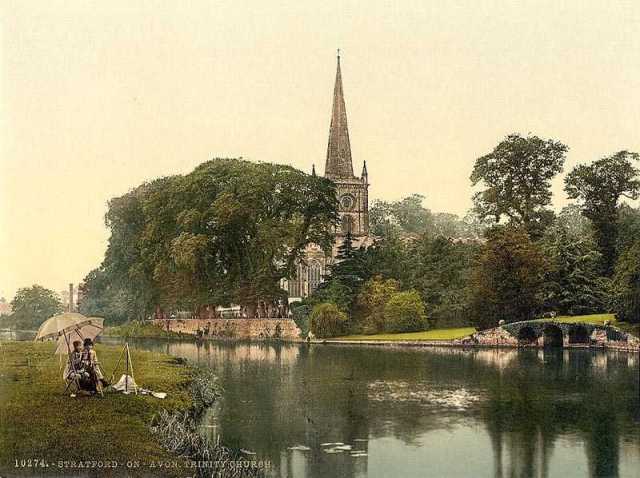
 jen's ancestors