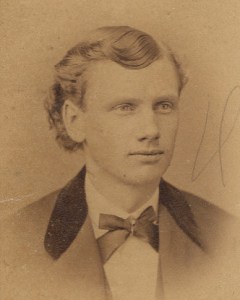
I recently found a very interesting newspaper article regarding my great great grandfather Dillon Franklin Hatch.
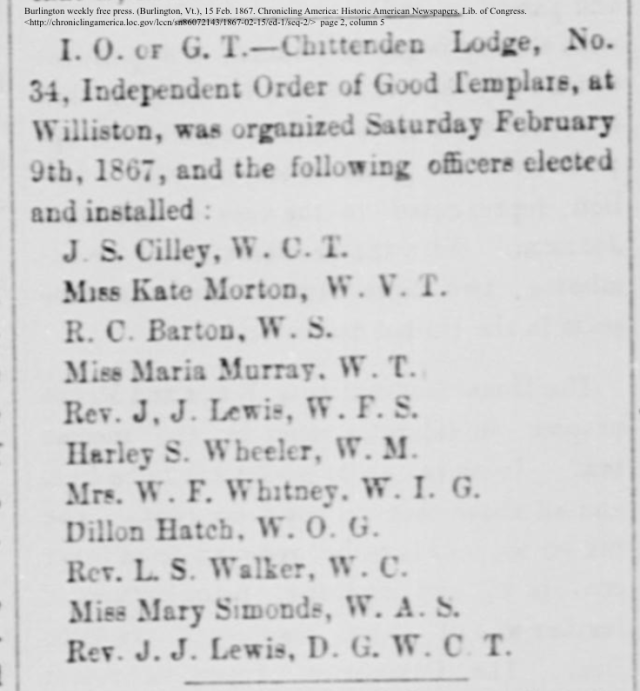
1867 Burlington, Vermont newspaper article.
According to the above news article he had been elected as an officer in the Independent Order of Good Templars (IOGT) as a W. O. G. He was only 18 when he became a member.
There are several different types of lodges and organizations I have vaguely heard about over the years in my genealogical endeavors. This one I was unfamiliar with. So I thought I would enlighten myself, and then share.
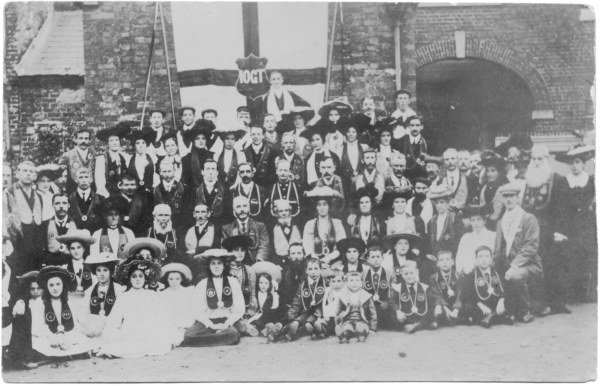
The IOGT was an abstinence/temperance society. These types of societies had started forming in the early 19th century, in some form or another, due to the large prevalence of societal problems related to drinking that existed at the time. Alcoholism and excessive drinking was having a very noticeable affect on the lives of families and society in general, so organizations were created by concerned citizens to try and curb the problem. (These same issues were also concerns of the suffrage movement, other than the right to vote of course.)
This particular order started in a village near Utica, New York in 1850 and was considered “a radical movement, ahead of its times”1 because they included women in their organization “proclaiming that all were brothers and sisters in one united family.”1
IOGT was also considered one of the more successful organizations because their relapse rate was much lower than that of others. There are several reasons given for its success. One was that it came about at the right time period. Many people were realizing that to help society become better as a whole it was important to control ones relationship with alcohol. Fraternal societies were also in vogue at the time, and because the IOGT was inclusive of women, even giving them places in leadership, it better met the needs of society as a whole. And lastly “it combined temperance and fraternalism” using ritual and degrees that helped educate and train members so that they could better help others who needed support in their abstinence endeavors.
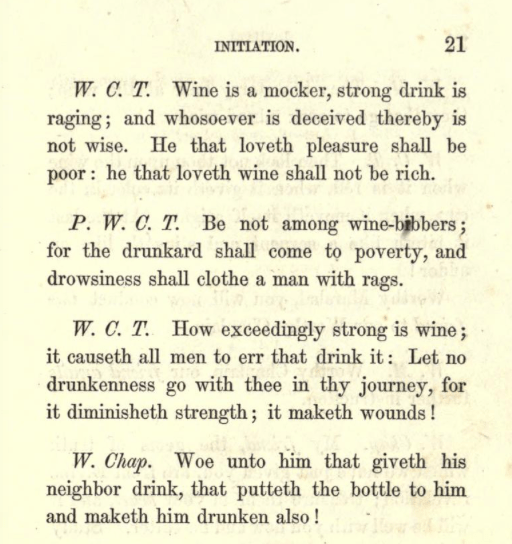
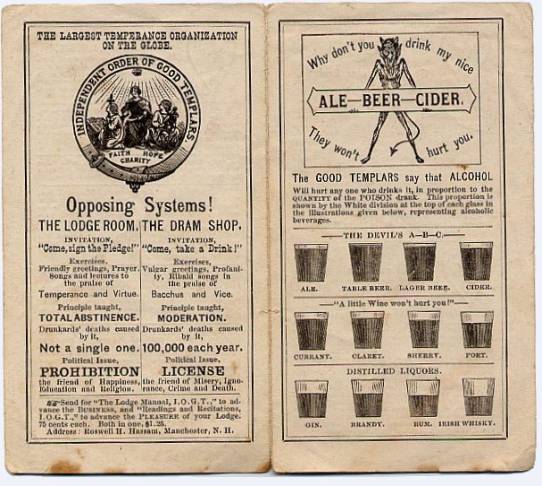
Taken from ritual book for the IOGT, regards part of initiation ritual.
This organization is still in existence today. In the 1970s they made changes to become more relevant to the times. Titles were changed, accoutrements became simplified, or were eliminated altogether. The name was changed from Order to Organization, little things like that. The rituals are also no longer secret.
It is doubtful that Dillon become a member because he had issues with drink, he was pretty young. He was probably just interested in the ideas of temperance and wished to help further the cause? In 1870 this article is found in the newspaper:
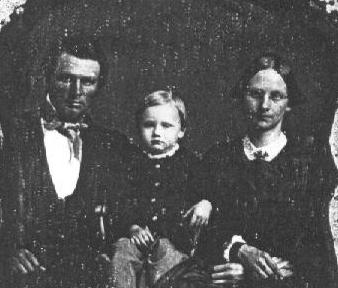
R-L: Oscar, Dillon?, Olive (Robinson) Hatch
Olive Hatch was elected W. V. T. at a regular meeting of Evergreen Isle Lodge No. 128, I.O. of G. T. on Friday evening, May 6th [1870].
This was Dillon’s mother Olive Robinson Hatch. She was elected Worthy Vice Templar of this particular lodge. So maybe her membership influenced her son’s interest in temperance.
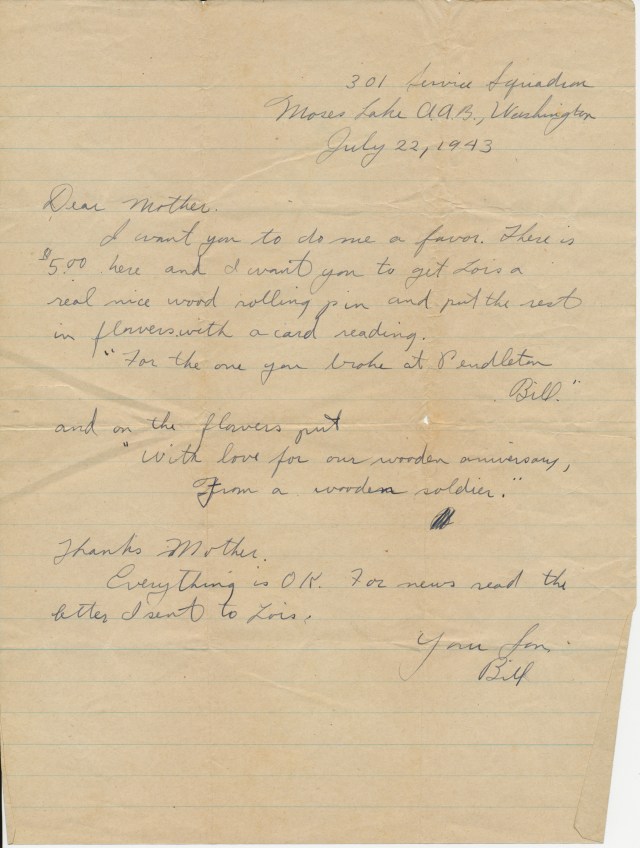
301 Service Squadron
Moses Lake A.A.B., Washington
July 22, 1943
Dear Mother,
I want you to do me a favor. There is $5.00 here and I want you to get Lois a real nice wood rolling pin and put the rest in flowers with a card reading.
“For the one you broke at Pendleton” Bill.
and on the flowers put
“With love for our wooden anniversary, From a wooden soldier.”
Thanks Mother.
Everything is OK. For news read the letter I sent to Lois.
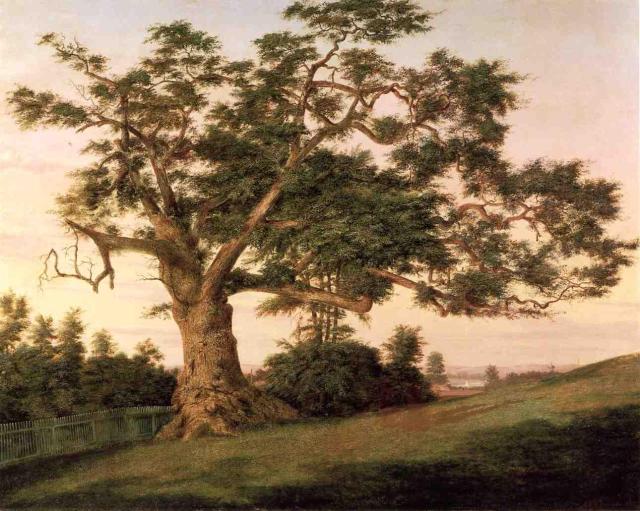
The Charter Oak by Charles De Wolf Brownell in 1857.
Most families have tall tales regarding an ancestor or two, some ghoulish, some funny or in this case kind of heroic.
In the year 1662 King Charles II granted the Connecticut Colony a large degree of self-rule in its charter. So they were accustomed to running things the way they liked. But in 1686 when James II took the throne, he decided that he wanted better control over the running of these colonies. So in his infinite wisdom he decided to combine several colonies together in what was called the Dominion of New England. [That has such a Deep Space Nine ring to it.] To oversee this change in policy he appointed Sir Edmund Andros as the new governor-general, and indicated that his appointment nulled and voided the colonies previous charters, after which Andros proceeded to visit each colony to collect their original charters, this was to be more of a symbolic gesture to emphasize the change in policy.
Andros’s visit to Hartford in October of 1687 was as unwelcome as his visits to the previous colonies. According to local stories, when Andros demanded that the document be handed over, the local leadership produced the charter but, shortly thereafter, the lights were doused. The charter was then ‘spirited out a window and thence to the Oak by Captain Joseph Wadsworth’. The man who doused the lights is said to have been his good friend Cyprian Nichols.
Andros was overthrown two year later in the 1689 Boston revolt, therefore dissolving the Dominion. The tree that the charter was hidden in became known as the Charter Oak.
According to a diary in the Wadsworth family Joseph told family:
I returned to Hartford on Friday and the following night removed the Charter from the hollow oak and concealed it in a candle box which was fitted into the stone foundation of my house.
According to the Cook family of Harwinton, Connecticut:
Captain Wadsworth and Captain Cyprian Nichols, of Hartford, agreed that they would try to save the charter; that Wadsworth gave Captain Nichols the choice of whether he would undertake to extinguish the candles or hide the charter. Nichols chose the former, and upon receiving a prearranged signal, personally and by others extinguished all of the lights in the Council Chamber, and that Captain Wadsworth seized the charter, secreted it in the oak, coming back as quickly as possible. Late that night, or very soon thereafter at the dead of night, Captain Wadsworth brought the charter to his own house with the intention of secreting it there, without anyone knowing of that fact. Upon his arriving home, to his dismay, he found that his wife had been suddenly taken ill with the colic, and he had to impart to her or some other member of the family the nature of his employment, and thereupon the charter, placed in an old candle box, was secreted in the corner of Captain Wadsworth’s cellar, and the earth replaced in such a way as to thoroughly conceal it. His injunctions to the person to whom his secret had to be disclosed were that if anything should happen to him, they should communicate to Captain Cyprian Nichols the secret of its hiding place.
Family tradition says that Joseph told this story to his daughter, Hannah, who told her grandson Allan Cook, who repeated it to R. Manny Chipman, who wrote History of Harwinton.
Wadsworth is suppose to have kept the duplicate charter until 1698, when he presented it to the ruling Governor and Council, at which time he was told to keep it until otherwise instructed.
The original at that time was in the hands of Samuel Wyllys…From May, 1698, to May, 1715, the duplicate charter lay in its box in the cellar. Over twenty seven years had elapsed since it was taken from the Council Chamber, and as almost all of those who participated in those stirring incidents had passed away I deemed it advisable to return it to the Governor and General Court, which after a conference, passed the following resolution: “The resolution in the original paper is thus endorsed by the clerks: … Their agreement, viz.: twenty shillings to Capt. Wadsworth for the services mentioned in the Resolution…”
Both of the main characters of this heroic tale, Joseph Wadsworth, and Cyprian Nichols are related to me. Joseph is an ancestral uncle, and Cyprian is my 9x great grandfather.
Historically, the white oak tree that housed the charter for a short time has become the focus of the tale. But it is Joseph Wadsworth who deserves all the credit for putting it there in the first place.
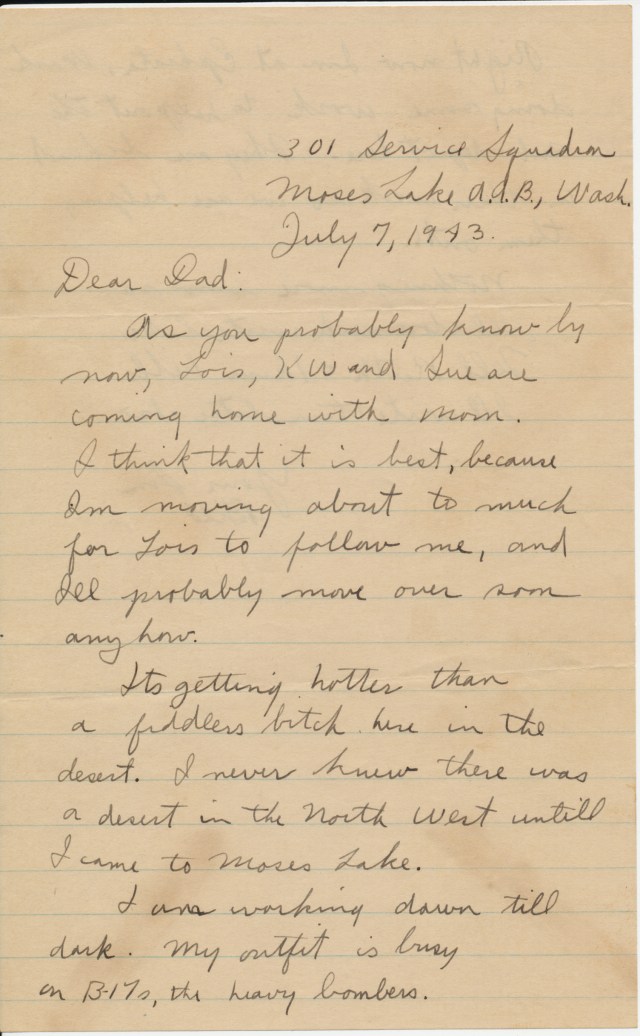
301 Service Squadron
Moses Lake A. A. B., Wash.
July 7, 1943
Dear Dad:
As you problbaly know by now, Lois, K W and Sue are coming home with Mom. I think that it is best, because Im moving about to much for Lois to follow me, and Ill probably move over soon anyhow.
Its getting hotter than a fiddlers bitch [what does that even mean?!] here in the desert. I never knew there was a desert in the North West untill I came to Moses Lake.
I am working dawn till dark. My outfit is busy on B-17s, the heavy bombers.
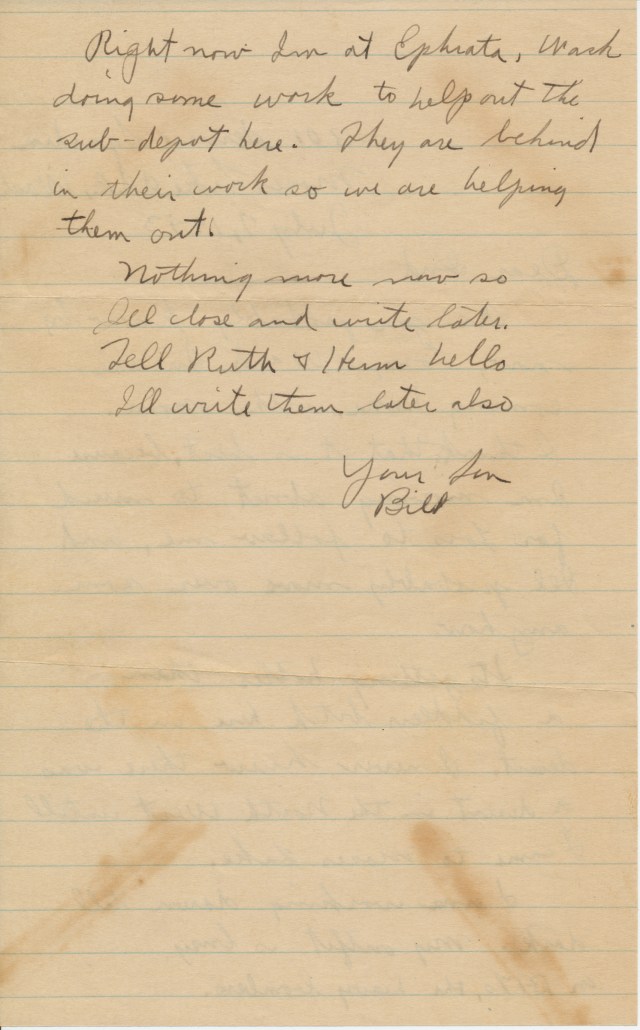
Right now Im at Ephrata, Wash. doing some work to help out the sub-depot here. They are behind in their work so we are helping them out.
Nothing more now so Ill close and write later. Tell Ruth & Herm hello Ill write to them later also
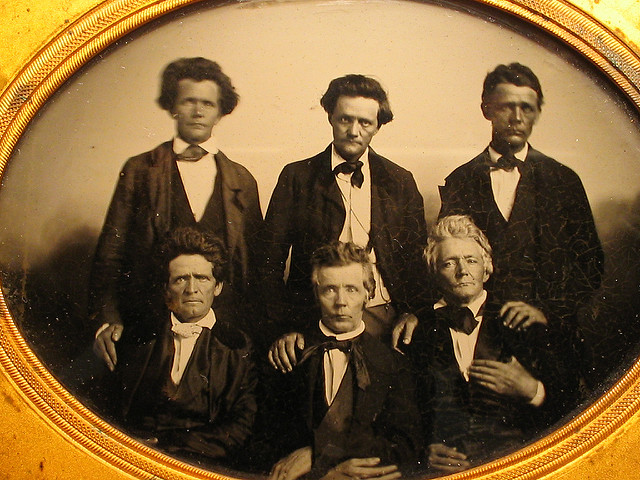
James is labeled as front row far left. My 3x great grandfather John is sitting next to him, in the middle.Found online, this is suppose to be a picture of James, I am not convinced. Maybe it is his son Franklin who died in the Civil War.
I mentioned James Shaw in a previous post in regards to his son Franklin being killed during the civil war, but recently while doing some newspaper research I found this great obituary for James in the Galveston Daily News, so I thought I would spend a little time researching his life. The obituary did bring to light the fact that most online trees have his death date wrong. James Shaw died February 10, 1880, his obituary was in the paper Friday of the same week. Everyone else on-line has February 24, 1879, probably taken from his headstone. [Note to researchers, headstones can be wrong.] James Shaw is my 4x great uncle.
According to one of his biographies written by a descendant, James was a surveyor and a teacher who left Ohio in 1833 taking passage on a steamboat heading to New Orleans, his intent was to go to Texas. However, he stopped in Mississippi and taught school for a few years. In 1835 he headed to Texas through the Robertson Colony on the Brazos. He served in the military until 1836, at which point he started his homestead at String Prairie, on land he received as a reward for his military service. Which is also the location of a historical marker in Texas [#8157 Indian Camp Branch which is located on an old buffalo trail. It was named by James to honor the hospitality of a band of friendly Tonkawa he encountered near the site in 1837.] He is also said to have been appointed to treat with the local Indians because he could speak all the dialects.
After establishing his new home, James headed to Missouri to marry his childhood sweetheart, Nancy Ann Riggs. And when they returned to Texas he opened the first school in the area. He was appointed postmaster in 1849, where their home also served as the first post office in the area. He surveyed and laid out the town of Lexington and was instrumental in helping to get the name changed in 1850 from String Prairie to Lexington, after the town in Massachusetts.
I thought I would transcribe his obituary where they also included a letter that James had written correcting errors from a published history of Texas.
Hon. James Shaw.
This veteran hero and statesman of Texas died at his home, near Lexington, Lee County, on Tuesday, of pneumonia, at the ripe age of 72. He was among the volunteers who came to the aid of the people of Texas in their struggle against the Mexican tyrant Santa Anna in November, 1835, and participated in the battle of San Jacinto, which ended in the overthrow and capture of the tyrant, and the destruction of one-half and the capture of the other half of his army. He came from Ohio by steamboat to Natchitoches, and from thence on horseback to San Felipe. Falling in on the road with several other Texas volunteers, they thought it advisable to go to headquarters before joining any company, and accordingly came to San Felipe, where the consultation was in session. The night they arrived there news was received of the capture of San Antonio by Col. “Frank” Johnson. Of subsequent events, Mr. Shaw himself wrote in a letter to the NEWS (in correcting some errors in Thrall’s History of Texas) on the 8th of December, 1879:
“A good many of the citizens looked upon the war as being over, and that we had come too late, which rather hurt our feelings, and some of our number intended to return forthwith without “immortal honors.” Gen. Houston, however, who was a member of the “consultation” hearing that we intended to return, came out and gave us a talk. He told us to remain in the country; that there would be plenty of agitating to do by spring; that Santa Anna would not give up Texas for that little fight at San Antonio, and advised us to go up into Robertson’s colony, above the old San Antonio road, on a buffalo hunt. Three or four of our number took his advice and came up into Robertson’s colony, and joined Capt. Thos. A. Graves (Robertson’s colony surveyor) and went out on Little river, San Gabriel and Brushy creeks on a surveying and buffalo hunting expedition. After having been in the woods some five or six weeks, the Indians, who had been watching us all the time, came upon us in large force just before day, killed two of our number, and severely wounded two, I and M. B. Shackleford being the wounded, and a Mr. Drake from North Carolina, and a negro man belonging to Maj. Holtzclaw, of Tennessee, the killed. There were then eight of our crowd left– two wounded; four of the crowd deserted us and scattered. Maj. Holtzclaw and Lemuel Moore (to who’s now departed spirits I shall always feel grateful for my life,) remained faithful to the wounded, and helped us into New Nashville, a fort on the Brazos, where the International railroad now crosses the river. After our arrival into the settlements all was confusion and excitement– the rumor was that Santa Ana was advancing with 30,000 soldiers. After a remarkably dry winter the flood gates of heaven has been opened, and every stream was overflowed. The Brazos River was 6 miles wide from Hilton Hill. After having rafted all the families over the Brazos, it was rumored that Gen. Houston had left Groce’s Retreat (where he had been encamped for some time), to intercept Santa Anna, across the Brazos River below with some 800 troops. I, Ben McCulloch, Tom Dunham and Tom Greer, (a brother of old Elick, once vice president), rafted the Brazos, and made our way for Gen. Houston’s army. We overtook him in the boggy prairie, the evening he arrived at Harrisburg, 18 April; my three comrades joined the artillery company and I, a cavalry company commanded by Capt. William H. Smith, not being able for foot service from my Indian wound. I was in two skirmishes on the 20th, commanded by Col. Sherman, and on the 21st first by Col. M.B. Lamar. After the battle, and treaty made, I was one of the 80 men commanded by Col. Ed. Burleson, who was detailed to follow the Mexican forces across the Nueces to see that the treaty made and agreed-upon was faithfully carried out; from thence we were ordered up to San Antonio, where our command remained until discharged in the winter of 1836. I served five years in the Congress of the Republic– two regular sessions in the House and three in the Senate, from 1838 up to 1844–and in the state legislature every session (with the exception of one, 1850-51 years), from 1846 up to 1856.”
Mr. Shaw was not only a man greatly esteemed and trusted by his constituents, but an intelligent and honest legislator, above all the intrigues of trafficking politicians, and following his own convictions, without regard to party. He closes the long though hasty letter quoted above in the following characteristic way:
“I am now in my 72nd year, and will soon be an old man. I always go to the Jackson Democratic ticket up to the late disastrous war. I voted an open ticket against the secession in 1861, believing that it would finally end in our subjugation and the freedom of the “n****r.”[let’s say slaves. So he was for slavery? Hard to tell the way it is written, but it sounds like he voted to not succeed, because he believed they would end up having to kowtow to the North and free the slaves.] Since which time, when the fire-eating Calhoun democracy got in the lead in Texas, I have taken but little interest in politics except in voting for what I thought to be the best man without regard to parties. I am not a radical, neither am I a greenbacker, but I am waiting patiently for”something to turn up.” I am now satisfied that it would be sometime before the president will be elected under the name Democrat. Had not the fire-eating portion of the democracy, at the last call session of Congress played h–ll with the democracy, a conservative Democrat, such as Gen. Hancock, Bayard or Seymour might have stood some chance of election, but now, I fear there is none.” James Shaw.
The surviving family of the deceased consists of his son, Hon. Travis Shaw, of Lee County; Mrs. Sophronia Douglas, wife of Isaac Douglas; his (Mr. Shaw’s) second wife, and her young son. Deceased had accumulated a large number of valuable papers connected with the early history of Texas, the use of which the NEWS expects to enjoy in collating facts in regard to the policy and events connected with the rise and progress of Texas as a Republic and state of the American union.1
Later in the year that he died, 1880, the paper published James letter that he had written in regards to the Thrall History of Texas, with other details:
Thrall’s History of Texas.
The following letter is written by that well-known Texas soldier and Legislature, Hon. James Shaw, but a short time before his death:
“Lexington, Lee County, December 8, 1870. –in reviewing the lead history of Texas, by Mr. H. S. Thrall, I find the most correct history of Texas now extant. Some few inaccuracies, however, occur, particularly in relation to myself. In his biographical sketches he says: “James Shaw came to Texas, in Schooner Hope, in 1831; he was in the Texas Congress in 1841 – 42, and the legislature in 1853, and now lives in Burleson County.” For the purpose of correcting history, and not for any egoism in relation to myself, I will give you a correct statement of my advent into Texas.
Mr. thralls gives a very accurate account of the battle of San Jacinto, and Gen. Houston’s conversation with Santa Ana. I think I ought to know, as I heard every word spoken between them. He, however, in his history of the Somervell campaign, in 1842, does, in my opinion, Gen. Houston great injustice. He says: “It has been conjectured that Pres. Houston never intended an aggressive movement against Mexico, and the Somervell acted under secret orders in disbanding his men,” etc. I enter emphatically that Pres. Houston never did intend an “aggressive movement against Mexico”; neither did the Congress of the Republic intend it. When Houston was inaugurated second term, on 13 December, 1841, I was Sen., representing the Counties of Milam, Robertson and Leon. After our adjournment at Austin, in the spring of 1842, present Houston went to Alabama and married. When he returns to Texas, with his worthy prize, “the Mexican raids under Vasquez and Wall had awaken the martial spirit in Texas.” The country was highly excited, and appeared to be strongly in favor of carrying the war into Mexico. Houston, however, would not shoulder the responsibility of so dangerous a movement; but called Congress to meet in Houston in the summer of 1842 to deliberate on the matter.
Accordingly, a bill was introduced into the house, and passed by some 10 majority for an aggressive movement against Mexico. It also passed the Senate by one majority. Houston vetoed the bill, and after his veto message was read in the House, his argument against the measure were so overpowering that many members who voted for the bill voted against it, and instead of having a two thirds majority to pass the bill they scarcely had a majority. After the bill was defeated Houston ordered Somervell to fall back from the Rio Grand. Somervell obeyed orders, and most of these law-abiding men– such as John Hemphill, William G. Cook, J.H. Herndon, M. Austin Bryant, J.D. Robertson, Tom Green, Ben McCulloch, and many others–obeyed their general, and marched back in accordance with the president’s orders.
Some two or three hundred discontented spirits thought it best not to obey orders, called for volunteers and elected William S. Fisher commander, and started to cross the Rio Grande into Mexico to gain “immortal honors” before they returned to Texas. Accordingly a few days thereafter, they met with a disastrous defeat at Mier, had some 16 killed 20 wounded; the balance, some 200, surrendered, were chained together, and started for Mexico, and on their way they need made attempt to regain their liberty. They overpowered their guards and started for home, but 173 were recaptured and every 10th man shot (which was 17 out of the 173), by order of Santa Ana; and everyone of them would have shared the same fate if Santa Anna had known that they crossed the Rio Grande, contrary to the orders of our president. To save the lives of these poor prisoners, although they had crossed the Rio Grande contrary to orders, Pres. Houston magnanimously held out the idea to Santa Anna that they had crossed in obedience to orders, and finally, through his great influence with Santa Anna, after nearly 2 years confinement, they were released and sent home.” James Shaw2
Another newspaper article from 1860 indicates that James and Sam Houston didn’t always agree politically:
We see that James Shaw, of Burleson County, is hoisted by the “Organ” here for treasurer…a respectable planter in Burleson County. It is the same Capt. James Shaw who ran for state senator last year, prepared a circular which was intended to be printed at the State Gazette office taking strong political ground against Sam Houston. It is the same Capt. James Shaw, of Burleson, who relates that while in the state of Ohio in 1857, when the news of the election of H. R. Runnels, to the office of governor, reached there, amid the rejoicing of Democrats and the disappointment of the Black Republicans, the latter had prepared to make a grand demonstration in favor of Sam Houston, had he been elected.
It is the same Capt. James Shaw of Burleson County, whom the “Organ” here presents to the Houston party for their support, who was a fellow soldier with Sam Houston at San Jacinto, but who it is said, never endorsed his course on that battlefield. It is evident that either Capt. Shaw or Gov. Houston has in quite a short period changed very much in their views of each other.3
James was heavily involved in the early days of Texas becoming a state and his politics appear to have been that of conservative Democrat. Which today would be a conservative Republican.
SHAW, James, San Jacinto hero, was born in Clermont County, Ohio, August 8, 1808…In 1838, James Shaw began is career as a Congressman. Representing Milam County in the House of the Third (1838-1839) and Fifth (1840-1841) Congresses, he returned to the Sixth as Senator from Milam and Robertson. In the Seventh and eighth, 1842-44, he held the same office. After Annexation, Shaw served one term in the legislature, the Second, 1847-1848, as Representative from Milam…4
More can be found on James in Alvy Ray Smith’s publication Elder Bethuel Riggs of Morris County, New Jersey, and His Family.
Source:
The Galveston Daily News. (Galveston, Tex.), Vol. 38, No. 281, Ed. 1 Friday, February 13, 1880, newspaper, February 13, 1880; (https://texashistory.unt.edu/ark:/67531/metapth465187/m1/2/: accessed February 27, 2017), University of North Texas Libraries, The Portal to Texas History, texashistory.unt.edu
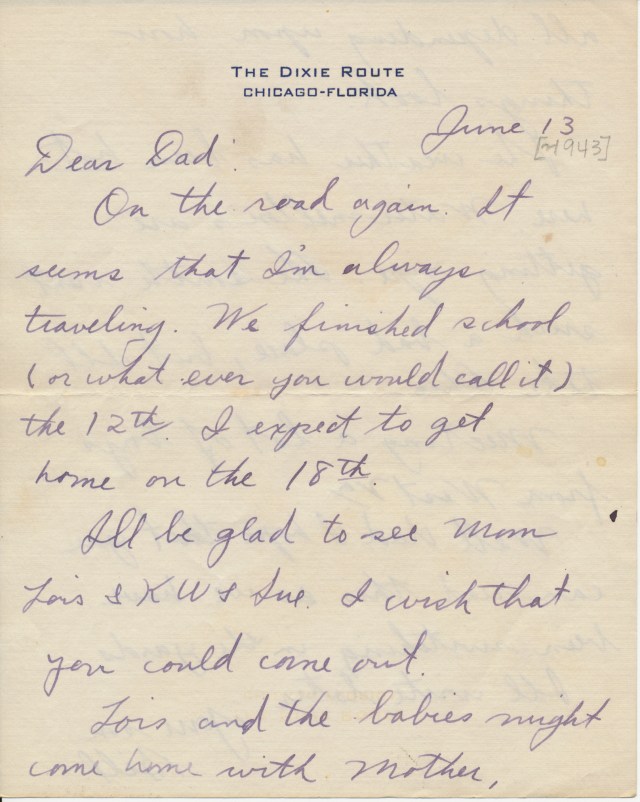
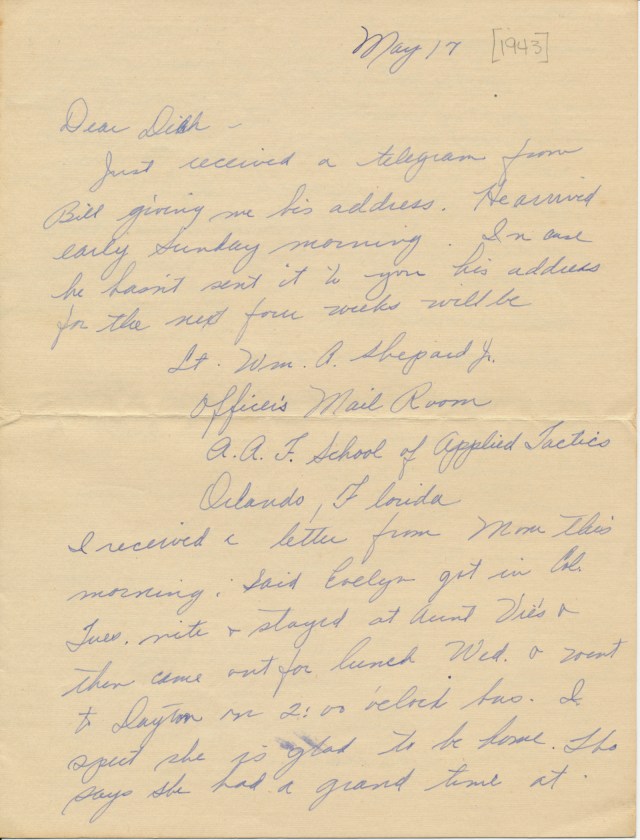
Just received a telegram from Bill giving me his address. He arrived early Sunday morning. In case he hasn’t sent it to you his address for the next four weeks will be
Lt. Wm. A. Shepard Jr.
Officer’s Mail Room
A.A. F. School of Applied Tactics
Orlando, Florida
I received a letter from Mom this morning. Said Evelyn got in Col. Tues. nite & stayed at Aunt Vie’s & then came out for lunch Wed. & went to Dayton on 2:00 o’clock bus. I spect she is glad to be home. Tho says she had a grand time at
2
Aunt Juanita, which I don’t doubt. I’m ironing today. Friday’s wash. I don’t have the heart to do my work. Ken, Sue, & I went for a walk yesterday to pass time & went down town to the candy shop. There isn’t hardly any candy here & you can only get it at certain times. I paid 66¢ for a half a pound.
Bill will be back in 4 weeks but it is going to be a lonely month. I hope you still plan on coming out as he will be back I know, for, I saw his ticket which was a round trip. We are hoping he will be stationed at Pendelton Field again on his return.
I sent the films H. A sent to Bill in Wash. last Mon. – Got them back Sat. & will send them on to Fla. Thus[?] night to catch up with him
3
sometime soon.
I bought myself a new dress & a pr. of shoes last week. $8.00 for the dress and $7.00 for the shoes. Clothes are expensive. If you come Dick – bring that print dress Ruth gave me – I forgot it – Kenny’s tricycle hair & bobbie pins, & that dress of Sue’s that Edna gave her.
Will close & get busy. Let me know when & if you decide to come.
There is an ancestor on the Shepard side of our family by the name of Walter Palmer. He was a Puritan born about 1585 in probably, Yetminster, Dorsetshire, England who emigrated to Salem, Massachusetts in June of 1629. When his daughter Grace married Thomas Minor in Massachusetts in 1634, our Palmer surname line ended. (This line of Minors eventually married a Lantz and daughter Susannah Lantz married Edmund Hays.)
Walter has the honor of being the first ancestor I have run across in my tree who commited murder, and got away with it.
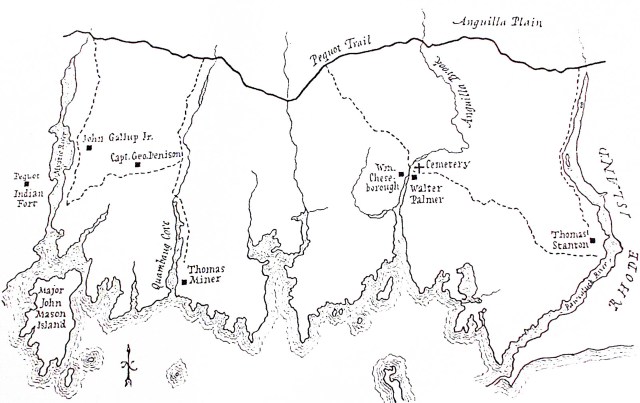
This map shows the locations in Stonington, Connecticut of our ancestors Thomas Minor and Walter Palmer1 where they settled in about 1653.
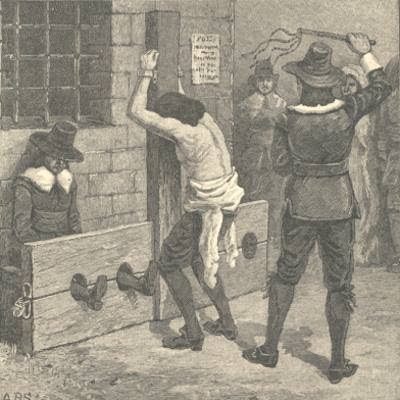
In 1630 a servant by the name of Austen Bratcher was to be punished by whipping, and Walter Palmer, a giant of a man at around 6’4″, was to do the job. Apparently he was quite enthusiastic about his responsibility, so much so, that he killed the man. The charge put forth by the court is stated below:
“the strokes given by Walter Palmer were occasionally the means of death of Austen Bratcher & so to be manslaughter.”
The court records have no details about why Austen was being punished, but one wonders if the offense merited such an enthusiastic response. A jury trial was held:
“Jury called on September 28, 1630 to hold an inquest on the body of Austin Bratcher.” “…that the strokes given by Walter Palmer, were occasionally the means of the death of Austin Bratcher, and so to be manslaughter. Mr. Palmer made his personall appearance this day (October 19, 1630) ; stands bound, hee & his sureties, till the nexte court.” At “a court of assistants, holden att Boston, November 9th 1630” numerous matters were taken up and disposed of, including the trial of Walter Palmer…” “A Jury impannell for the tryall of Walter Palmer, concerning the death of Austin Bratcher…The jury findes Walter Palmer not quilty of manslaughter, whereof hee stoode indicted, & soe the court acquitts him.”
One of the witnesses in the trial was William Chesebrough who happened to be a very good friend of Walter’s. William was a gunsmith who traded in illicit goods, such as guns and rum, with the local indiginous people. (Although, he always vehemently denied any such rumors.) Maybe his testimony persuaded the jurors to acquit his good buddy Walter.
After the trial Walter went on with his life as if he had done nothing wrong. His fellow citizens didn’t hold a little murder against him either, he took the Oath of a Freeman on May 18, 1631 (An oath drawn up by the Pilgrims during the early 17th century meant that the person was an established member of a colony who was not under legal restraint, and vowed to defend the Commonwealth and not to conspire to overthrow the government),2and continued to be a respected member of the community until he died.
So I guess the world being what it is, as usual, being one of the top dogs in town is all it takes to get off of a murder rap.
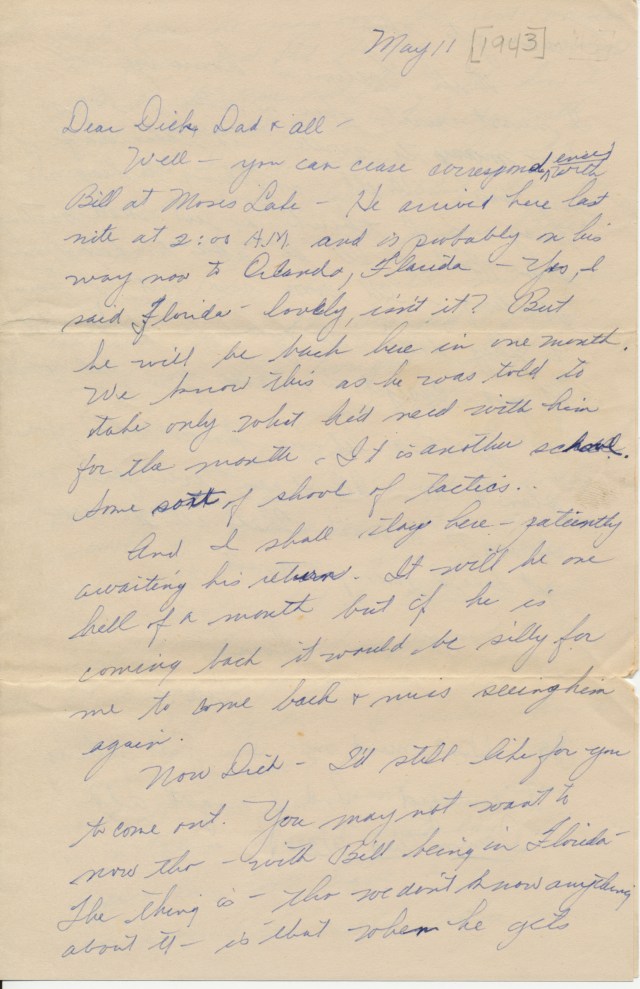
Well – you can cease corresponding with Bill at Moses Lake – He arrived here last nite at 2:00 A.M. and is probably on his way now to Orlando, Florida – Yes, I said Florida – lovely, isn’t it? But he will be back here in one month. We know this as he was told to take only what he’d need with him for the month. It is another school. Some sort of school of tactics.
And I shall stay here – patiently awaiting his return. It will be one hell of a month but if he is coming back it would be silly for me to come back & miss seeing him again.
Now Dick – I’d still like for yo uto come out. You may not want to now tho – with Bill being in Florida – The thing is – tho we don’t know anything about it – is that when he gets
p2
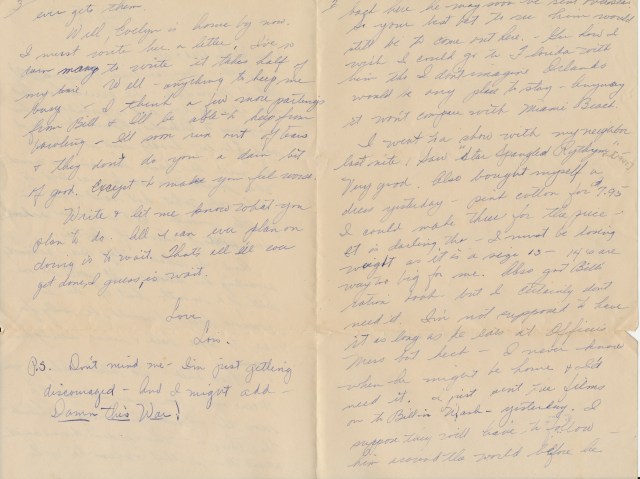
back here he may soon be sent overseas. So your best bet to see him would still be to come out here. – Gee how I wish I could go to Florida with him tho I don’t imagine Orlando would be any place to stay – anyway it won’t compare with Miami Beach.
I went to a show with my neighbor last nite! Saw “Star Spangled Rythym” [released in 1942] – Very good. Also bought myself a dress yesterday – pink cotton for $7.95 I could make three for the price – It is darling tho – I must be losing weight as it is a size 13 – 14s are way too big for me. Also got Bill’s ration book but I certainly don’t need it. I’m not supposed to have it as long as he eats at Officer’s Mess but heck – I never know when he might be home & I’d need it. I just sent the films on to Bill in Wash – yesterday. I suppose they will have to follow him around the world before he
p3
ever gets them.
Well, Evelyn is home by now. I must write her a letter I’ve so dam[darn?] many to write it takes half of my time. Well – anything to keep me busy. – I think a few more partings from Bill & I’ll be able to keep from bawling – I’ll soon run out of tears & they don’t do you a darn[dam?] bit of good. Exept to make you feel worse.
Write & let me know what you plan to do. All I can ever plan on doing is to wait. That’s all I’ll ever get done, I guess, is wait.
Love
Lois.
P.S. Don’t mind me – I’m just getting discouraged – And I might add – DamnthisWar!
John and Elizabeth (Noble) Shepard of Westfield, Massachusetts had two sons that we probably descend from, the famous General William and the not so famous Enoch. While William and his wife stayed in Westfield their whole lives, Enoch moved his family around eventually landing in Ohio when land became available there after the Revolutionary War. I use the term probably when discussing Shepard ancestors before Hartley because, while DNA indicates that we descend from these Shepards, and verbal family history has Hartley’s parents as Henry and Huldah Shepard, we still have no documented evidence to confirm this.
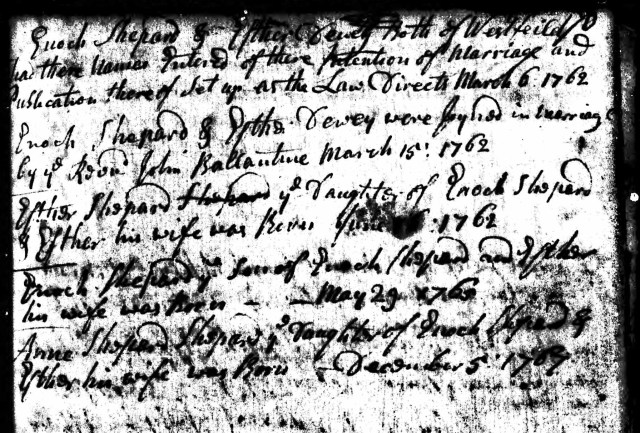
Enoch Shepard was born in Westfield, Hampden County, Massachusetts on 25 Oct 1742. He was five years younger than his brother William. In his formative years he appears to have received schooling, but by his own admission it was probably just enough to learn basic reading, writing and arithmetic. When he reached the age of 19 he married a cousin (of some degree), Esther Dewey, a descendant of Thomas Dewey and Constance Hawes. (We descend from the same Thomas Dewey and Constance Hawes three times in this Shepard line.) His brother William married Esther’s sister Sarah.
Enoch and Esther’s marriage entry in Westfield, Massachusetts
In July of 1773 Enoch and Esther purchased a lot in the town of Murryfield, (which is now called Chester) and apparently they were dismissed from their church in Westfield to Murrayfield in July of 1775 and admitted to the church in Murrayfield in January of 1776. It was from here that Enoch signed up and joined the Revolution. And while he might not have had as much notariety as William, he was Captain of his own unit. Although according to this record he was uncomfortable with the assignment:
Petition addressed to the Council, dated Murrayfield, April 6, 1778, signed by said Shepard, stating that he held a commission as Captain, 13th company, Col. John Mosley’s (3d Hampshire Co.) regiment, although he had viewed himself as not equal to the discharge of the office when chosen, but having made the experiment and finding himself unable to discharge the duties of his office with credit to himself or benefit to the country, asking to be permitted to resign his commission; ordered in Council April 24, 1778, that the resignation be accepted.
Enoch shows up in a history of Murrayfield book1 usually as Capt. Enoch Shepard, involved in local goings on and committees for the time that they lived in the town. They even managed to be chastised by their church according to this interesting statement found online:
…on 23 May 1784, Capt Enoch Shepard and Esther his wife, “a beloved brother and sister,” were admonished for neglecting worship, and on 26 December, 1784 they were excommunicated. [from the church in Murrayfield]
When the town of Wolcott in Vermont was created in 1781, it is thought that our Enoch is one of the people listed as a proprietor.2They appear to have moved to Vermont about 1784/5. But, if indeed this is the same Enoch and they did move to Wolcott, the family didn’t stay long before they packed up and headed further south, eventually making the move to Marietta, Ohio.
The first, frame house in Marietta was built in the summer of 1789… Captain Enoch Shepherd (brother of General Shepherd, who suppressed Shay’s rebellion in Massachusetts) prepared the timber and lumber for this house at Pennsylvania and made it into a raft, upon which he brought his family to Marietta.
Enoch’s newspaper advertisement selling their property in 1778 in Murrayfield.Enoch’s receipt regarding their land in Marietta.
Enoch supported the family as a Deacon and mill operator. He, along with a partner established the first mill in Marietta. As usual, we know very little of Esther, his wife. She died in 1794, and Enoch married again shortly afterward.
While the details of this Shepard family are currently unclear and spotty, I do get a good sense of Enoch through two books that he had published during his lifetime. It was here at Marietta that he appears to have taken his title of Deacon with great seriousness and fervour, because he wrote two books related to spritual matters. The first, which was more of a sermon, was quite boring (Dissertation on the quantity and quality of sin, 1814). I tried to muddle through but had a hard time keeping my eyes opened and never finished it. The second I discuss below.
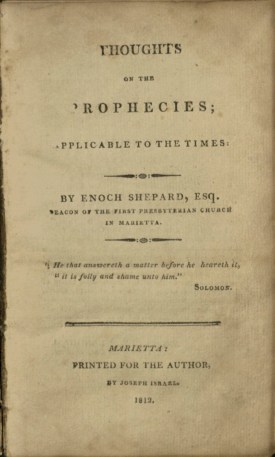
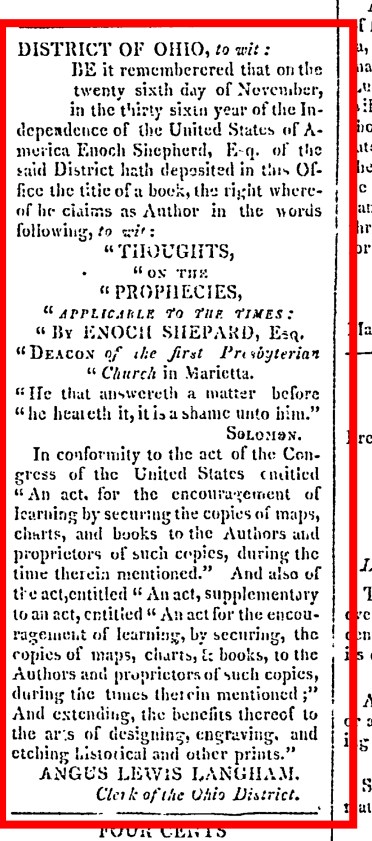
Above is the title page of the book, on the right is the newspaper advertisement regarding the publication. Printed in 1812.
So here are my impressions of Thoughts on the Prophecies, by Enoch Shepard, copywrite 1812, written by Enoch in response to a Rev. Bishop Faber’s book, where Faber apparently favors the Catholic Church too much for his liking.
The first thing I noticed while reading this book, was that great Gramps was very long winded. His tome bombastically denigrates the Catholic church – repeatedly. Over and over. Hammering on the same points from different angles for over 150 pages. With, of course, snippets of disgust against Jews and Muslims thrown in for a little diversity. And, while I might even agree with some of his points regarding the Catholic church, I don’t at all condone his bigotry. Apparently Enoch didn’t really practice christian charity as well as one would expect from a Presbytarian Church Deacon.
However, I do have to admit that against my will I was amused and quite enjoying his ranting style. I expected to be very bored with the subject matter, but I wasn’t, even though I didn’t always understand what he was talking about, or referring to, as he used lots of bible quotes (I never read a bible) and ancient battle references.
In his conclusion Enoch indicates that he never received a liberal education, which comes across in the book quite clearly. Someone with a liberal education tends to be more inclusive of other’s ideas, beliefs and points of view. It is also pretty clear that he believed that the current state of the church foretold “the approach of the glorious millennial day” also known as armageddon, (well, I call it the zombie apocalypse, but that’s just me.)
Along with being very anti-catholic in tone, Enoch also speaks in a very derogatory and contemptuous manner of ancient Roman religious beliefs and practices. The usual tendency of all religions to denigrate those who don’t believe in their version of god/s.
“The Roman Empire included many idolatrous and heathen nations, who were zealous worshipers of their several Gods, and obstinately tenaciously of their absurd rites and ceremonies. Consequently the pure doctrines of the Gospel, which struck at the foundations of their folly, and sought to overturn all their heathenish superstitions, appear in their view either foolishness, or a rock of offence. So that they become enemies to the christians, who would not join them in their idolatry, and with the utmost avidity engaged in persecutions authorized by the Emperor. Hence the followers of Jesus were always treated with contempt, and wanton abuse.” p10
Enoch was misinformed about early Roman history regarding the matter of the Christians and their persecution. Even to this day many Christians still, erroneously, believe that Christians were killed in colosseums in droves because of their religious beliefs. The Romans were pretty liberal regarding the religious views of other cultures, live and let live was their motto.
He went on to brag that when Constantine came to power and brought Christianity to the empire
“Pagans were turned out of office and faithful christians pointed in their stead.” p16 “The idol images were destroyed, and polluted temples cleansed, and converted into houses for the worship of the true God.” p17
Speaking in regards to a story about Mohamed “In his [Mohamed’s] travels…he had an opportunity of observing the many divisions and contentions, which existed among the professors of Christianity; for the idolatrous practices, which soon after were established in the popish Church…”p25
In this statement he makes reference to his distaste for Jews and Muslims:
More regarding Mohamed, and his shutting himself in a cave “…he procured some Jews and apostate Christian; also a few scribes vile enough to answer his purpose. With these he shut himself up in a cave for several years…When he had obtained from these despicable creatures all that he wished, he then put the whole to death.”
He proceeds to denigrate Mohamed and his beliefs where in this example he speaks of the wars that Mohamed imposed to establish his own beliefs over the Christians:
“Those parts which Mohamed subdues, and in which he established his wicked abominations…”p32.
I would say this book gives a pretty good idea of Enoch’s worldview. It is possible that his wives shared in this prejudice, then again, they could have just rolled their eyes, shook their head and continued to put the dinner on the table. I don’t think Enoch made much profit on his book. Five hundred copies were made the first printing, and there doesn’t appear to have been a second one, so any hopes of his being celebrated and feted as a famous author never came to fruition. Enoch died in 1821 at the age of 78.
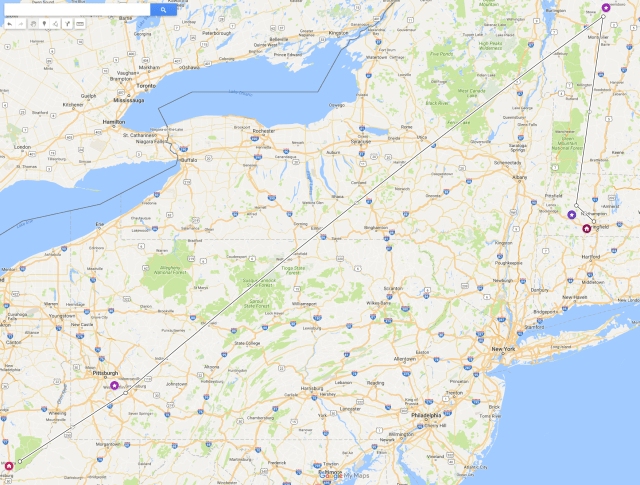
Here are the moves of the Enoch and Esther Shepard family. Starting in Westfield, making a short hop to Murryfield, then possibly Vermont, and on to Pennsylvania, where they built the raft that floated them to their final destination of Marietta, Ohio.
If anyone is interested in reading his book let me know. It is out of copywrite but I can freely share my digital copy, which was created just for me and is not available anywhere online. Believe me I tried. Thank goodness for the persistance of our University’s ILL department.





 jen's ancestors